
The Northern Camino de Santiago - a 2025 guide
The Northern Way of St.James is a spectacular pilgrimage route in Spain. It goes past beautiful beaches, coastal towns, picturesque mountains, pasture fields, and lush forests. If you want to see both; the sea and the mountains - the Northern Way is a great route to walk. This Camino is also known as one of the toughest routes of the Camino de Santiago due to its mountainous terrain with frequent climbs and drops. If you want to escape the crowds and go more off the beaten track, it is a good alternative to the popular French Camino.

Stingy Nomads participates in the Amazon Services LLC Associates Program and other affiliate programs. If you click on the link and purchase the item or make a booking, we will receive an affiliate commission at no extra cost. Thank You for supporting us and assisting us to produce quality, free content.
The Northern Way overview
- The Northern Camino is one of the pilgrimage routes of the Camino de Santiago.
- Total distance - 835 km/518 mi
- Starting point - Irún, a town in the Basque Country on the border with France.
- Finishing point - Santiago de Compostela.
- Accommodation - public & private albergues, hostels, and hotels.
- Average cost - 40 Euros per person per day.
- The route is marked with yellow arrows and shells.
- The Northern Way crosses four Spanish regions: the Basque Country, Cantabria, Asturias, and Galicia.
For a detailed day-by-day itinerary that includes walking stages, distances, places to stay, highlights, and challenges of the Camino check out our Camino del Norte walking stages post.
PDFs of the route
You can download our free PDF files with walking stages and places to stay on the Northern Way of St.James.
- Walking stages. Camino del Norte. Part 1 (Irun to Gijon). PDF
- Places to stay. Camino del Norte. Part 1. PDF
- Walking stages. Camino del Norte. Part 2 (Gijon to Santiago). PDF
- Places to stay. Camino del Norte. Part 2. PDF
Travel insurance for the Camino
You can read more information on Camino travel insurance or get your instant quote right now.
Who are World Nomads?
World Nomads’ mission is to support and encourage travelers to explore their boundaries.
They offer simple and flexible travel insurance and safety advice to help you travel confidently, destination guides and tips to help you plan your trip, and responsible travel insights to help you travel better
World Nomads provides travel insurance for travelers in over 100 countries. As an affiliate, we receive a fee when you get a quote from World Nomads using this link. We do not represent World Nomads. This is information only and not a recommendation to buy travel insurance.
What is the Northern Camino?
The Northern Camino or the Camino del Norte is a long-distance pilgrimage route across Northern Spain to the tomb of Apostle St.James in the Cathedral of Santiago de Compostela. It's one of the main Camino de Santiago routes.
If you have time I suggest spending a couple of days in Santiago de Compostela there are many great things to do.

How long is the walk?
It takes between 30 and 35 days on average to complete the Northern Camino from Irun to Santiago de Compostela. The time depends on how far you walk every day and how many rest days (if any) you take.
How difficult is the route?
The Northern Camino is a challenging route. It's considered one of the most difficult Camino de Santiago routes in Spain. First of all because of the long distance, over 800 km/497 mi. Second, the route has many ascents and descents and some long walking days. For inexperienced walkers, I would recommend training for the Camino de Santiago beforehand.
Where does the Northern Way start?
The Northern Camino starts in Irun, a small town in Northern Spain on the border with France. You can start walking from anywhere along the route depending on how far you want to walk and how much time you have.
The most popular starting points
| Name of the place | Distance to Santiago |
|---|---|
| Irún | 835 km/518 mi |
| San Sebastian | 808 km/502 mi |
| Bilbao | 680 km/422 mi |
| Santander | 556 km/345 mi |
| Gijón | 348 km/216 mi |
| Avilés | 324 km/201 mi |
| Castromaior | 114 km/70,8 mi |

How to get to the Camino?
The Camino starts in Irun, the Basque Country, Northern Spain. You can fly there or take a bus or train. If you come from overseas the easiest way is to fly to Madrid and from there get to Irun.
Flying to Irun
The nearest airport is San Sebastian with direct flights only from Spanish cities: Madrid, Barcelona, Mallorca, and Seville. If you come from overseas you can first fly to one of these cities and from there to San Sebastian. The flights are operated by Vueling and Iberia (Barcelona and Madrid) and Volotéa (Sevilla, and Mallorca). A shuttle bus runs between the airport and Irun with one connection in Ondarriba.
Getting to Irun by bus
The easiest way of getting to Irun by bus is from Madrid. There are several daily direct buses. The journey takes between 6 and 7 hours. You can find departure times and prices on the ALSA website. There are direct buses to Irun from Bilbao, Pamplona, Oviedo, Burgos, and Santander. To get to Irun from Barcelona first, you get a bus to Pamplona and from there another bus to Irun.
Getting to Irun by train
Direct trains connect Madrid and Irun. The journey takes 6 hours. You can find information on the trains to Irun on the Renfe website.
Luggage transfer on the route
If you don't want to walk with a heavy backpack you can use a luggage transfer service. The Spanish post office Correos offers luggage transfer service on the Northern Way of St.James.
In 2025, the luggage retransfer service on the Camino del Norte is available from Easter to 31 October. There is no backpack delivery service offseason. The average cost is 8-9 euros per backpack per stage, depending on the distance.
It works very easily, you leave your backpack in the morning at the reception. The company picks it up and delivers it to your next accommodation place. By the time you arrive your backpack will be there. You can arrange the delivery in advance or make up your mind once you start walking.
The best time for walking
In our experience late spring (May) and early fall (September to first half of October) is the best time to walk the Camino. The weather is pleasant and it's outside the peak touristy season which is July and August.
To walk the Northern Way off-season (November - March) is quite tricky; it rains a lot, it gets quite cold and windy, and many albergues are closed. On the bright side hotels are much cheaper so you can stay in private every night.
As for walking the route in the peak season (July and August), it’s doable but it can get very hot and dry and overcrowded (not the Camino itself but the coastal towns along the route as it's a popular summer holiday destination).


How much does it cost?
In our experience the Northern Camino is the most expensive Camino route. After walking for 3 or 4 days we wanted to switch to a different Camino because everything was too expensive (we walked it in the off-season). Once we were out of the Basque Country prices got better. If you walk in the peak season (July and August) the cost of accommodation might put you off the walk.
Accommodation
The Basque country is one of the most expensive regions in Spain, especially the coastal part. Usually being a pilgrim is cheaper than being a tourist. At least accommodation costs you less because you can stay in albergues but not on the Northern Camino (at least not in the first part of it).
Hotels and guesthouses can be a good alternative off-season when prices are lower. Then you can find a double room with a private bathroom for 50-60 Euros. In the summer months, a room in a hotel is more expensive, between 80 and 90 Euros, it must be booked in advance, especially in places like San Sebastián, Getaria, etc.
Cantabria, Asturias, and Galicia are more or less at the same price level. There are more public albergues, and some of them are open all year. Public albergues are around 10-12 Euros, private albergues/hostels - 15-20 Euros. There are some albergues for donation.
For a private double room (with a bathroom) in these three provinces, you'll pay an average of 50 Euros, sometimes more, sometimes less, depending on the location and facilities of the place. The cheapest double room we got was in Asturias for 40 Euros with a private bathroom. The most expensive one was in Gijón for 60 Euro but it was a great place. In the high season (July-August) hotels are a lot more expensive.

Food
Food on the Camino de Santiago is a part of the experience. Northern Spain in particular the Basque Country is known for its food; pintxos, seafood, fish, and vegetables are top quality. The region is known as one of the world's best destinations for food lovers. Pintxos (similar to tapas) in the Basque Country are a must-try. The other three provinces have delicious food as well with a great variety of fish, seafood, meat, and vegetables.
Eating out costs more or less the same everywhere on the Northern Camino. Menu del Día (set lunch) is between 12 and 15 Euros, depending on the restaurant, area, and food quality. A cup of black coffee – 2 Euros, coffee with milk – 3 Euros. Breakfast (toast with jam and butter and coffee) – 5 Euros, English breakfast - 10 Euros. Dinner at a restaurant is between 25 and 35 Euro pp.
Shopping
Food prices in different provinces are more or less the same. The main difference is buying food in a big supermarket or a small grocery shop. The second one is usually more expensive. Average shopping will cost you between 8 and 10 Euros per person for 2 meals.
Set up your budget
- Accommodation – 10-12 Euros pp. for municipal albergues; 15-20 Euros pp. for private albergues and hostels. Hotels (a double room) from 60 Euros, in some places 80+ Euros.
- Eating out - average 12 Euros for Menu del Día; 2 Euros for a cup of coffee; 5 Euros breakfast with coffee; 3 Euros for a pintxo; 25-35 Euro for a restaurant dinner, 10-12 Euro for a dinner at the albergue (many private albergues serve communal dinner).
- Shopping - between 8 and 10 Euros pp. per day.
- Laundry - most places charge 4-5 Euros for washing and 5-6 Euros drying.
- Luggage transfer - 8-9 Euros per backpack per stage.

Our budget breakdown
Per person for 30 days
- Accommodation - 600 Euro or 20 Euro per person per day.
- Shopping - 240 Euro or 8 Euro pp. per day. We tried to cook every time we had a kitchen.
- Eating out (coffee, pintxos, menus) - 300 Euro or 10 Euros pp. per day.
- Other (laundry, entrance tickets, etc.) - 50 Euros per person.
In total, we spent 1190 Euros per person in 30 days or 40 Euros per person per day. We didn't try to budget too much and stayed a couple of times in private hotels, went out for drinks, and sometimes ate Menu del Dia.
If you try to budget, stay only in albergues, don't go out, and buy food in supermarkets, you can do it for 30-35 Euros pp. per day.
More details on the cost of the Camino can be found in our The cost of walking the Camino de Santiago - a detailed breakdown post.
What to pack for the walk?
We’ve walked nice different Camino de Santiago routes in different seasons and all kinds of weather. Here are some of our top peaks for the Camino.
- The right walking shoes and a comfortable backpack for the Camino are essential.
- Merino Wool Socks - wearing these socks you have fewer blisters and they don't "stink".
- Headlamp - you'll need one to use in a dorm if you want to read or need to find something in your backpack when the light is off.
- Neck Pouch/Passport holder - keep cash and passports together
We have a detailed Camino de Santiago packing post where you can find the complete list of items recommended to take on the Camino for men and women for different seasons.
Best guidebooks for the Camino
We usually use Camino guidebooks by John Briely. Unfortunately, he doesn't have one of the Northern Camino. The options are quite limited.
- Camino del Norte and Camino Primitivo: To Santiago De Compostela and Finisterre from Irun or Oviedo (Cicerone Guides). Kindle & paperback
- Camino del Norte: Irún to Santiago along Spain's Northern Coast (Village to Village Map Guide). Kindle & paperback, 2025

What is the accommodation like?
The Camino has a wide network of albergues - special hostels for pilgrims. Albergues can be public, run by a local municipality, and private, run by a person or a company. Public (municipal) albergues are exclusively for pilgrims with a Credential walking or cycling the Camino. Public albergues are the cheapest accommodation option on the Northern Way. They cost around 8-10 Euros per person.
Private albergues usually allow tourists but most of the time people staying there are pilgrims. A bed in a private albergue costs 15-17 Euros. Both public and private albergues have dormitory rooms with several beds and shared facilities. Private albergues usually have better facilities than public ones.
| Features | Public albergues | Private albergues |
|---|---|---|
| Can be booked | no | yes |
| Only for pilgrims | yes | no |
| Need a Credential to stay | yes | no |
| Allow luggage delivery | no | yes |
| Price | 8-10 Euros | 15-17 Euros |
| Facilities | ||
| Hot shower | yes | yes |
| Kitchen | usually | usually |
| Wi-fi | sometimes | yes |
| Restaurant | no | usually |
| Washing machine | usually | usually |
Many municipal and private albergues on the Northern Way are closed for the offseason if you walk the route between November and February it’s better to check beforehand if the albergue you’re planning to stay in is open or not.
Most places along the Camino have hotels or guesthouses. These are more expensive but much more comfortable. If you can afford it I'd recommend from time to time staying in a private room. It's nice to have some privacy and be able to rest well without being disturbed. We usually stay one or two nights a week in a private room.
We haven't seen many campsites on the Northern Camino there are some but most of them are off the route. We met a couple of people carrying a tent on the route but they ended up staying in public albergues instead of wild camping.

How busy is the route?
The Camino del Norte is the fifth most popular Camino de Santiago route. In 2023 4,6% (20 582 pilgrims) of all pilgrims who arrived in Santiago completed this route. It's by far less busy than the Camino Frances or any route of the Portuguese Camino from Porto. Though there are not many pilgrims walking it the coastal towns are very popular tourist destinations. July and August are the peak touristy season which means it gets very busy and expensive. It might be not the best time for walking.
My favorite parts of the Northern Camino
These are in our opinion the most beautiful walking stages of the Northern Camino de Santiago.
Irún to San Sebastián (the Basque Country) - sea scenery, cliffs, forest, beaches. Incredible views from the top before descending to Pasaia and stunning views on the way from Pasaia to San Sebastián.
San Sebastián to Getaria (the Basque Country) - beaches, green hills, the sea. Great views from the lookout before Zarautz and beautiful Paseo Maritimo (promenade) from Zarautz to Getaria.
Laredo to Noja (Cantabria) - a nice beach walk in Laredo to the ferry, beautiful sea scenery on the way from Santoña to Noja.
Güemes to Santander (Cantabria) - if you’re lucky with the weather it might be one of the most beautiful walking days on the Northern Way. Most of the time you walk on the edge of the cliffs, by the sea, past some beautiful hidden beaches. Walking barefoot on the sand of Playa Somo for a couple of kilometers is incredible.

Santillana del Mar to Comillas (Cantabria) - a nice forest walk with a couple of small towns on the way, a beautiful view of Comillas and the coast on the last 2km.
Comillas to San Vicente de la Barquera (Cantabria) – breathtaking scenery with cliffs, ocean, beaches, and green hills, I just wanted to live in one of the houses on the top of those green hills overlooking the sea.
Colombres to Llanes (Asturias) - if you take the coastal route Sendero de la Costa you’ll get some incredible views, plus you’ll walk past Bufones de Arenillas (seawater geysers).
Soto de Luiña to Cadavedo (Asturias) - if you walk along the coast you'll get some spectacular views. 2km before Cadavedo do a detour and go to the beach first from there go up to Ermita de la Regalina (small chapel), you'll get some stunning views from there.
Tapia de Casariego to Ribadeo (Asturias-Galicia) - the last bit of walking by the sea, after Ribadeo the route turns inland. The last 5km to Ribadeo was the most picturesque with great viewpoints. The bridge Puente dos Santos looks quite impressive from Figueras's side as well.
Mondoñedo to Gontán (Galicia) - unlike most of the previous walking stages on the Norther Way this one has nothing to do with the sea, only mountains, and forest. It is beautiful and remote, there is quite an uphill walk on the route try still to enjoy the scenery.
The worst part of the route
The walk from Gijón to Avilés – 25km (except 3km somewhere in the middle) is along the busy roads or through industrial areas, if you’re thinking of skipping a stage it’s one to skip. I hate walking next to the highways all the noise gets on my nerves if you add to these dull industrial areas with grey fences and chimneys - it's the worst combination.

Northern Camino FAQs
Is there a lot of road walking on the Northern Camino?
There were some roads and sidewalks on the route like on any other Camino. If I must compare the Northern Way with other Caminos we've done - there was less walking on asphalt or cobblestones than on the Portuguese Way but more than on the Primitivo. For the first couple of days, the route goes most of the time on the path or beach, with not many roads.
Most of the time you get asphalt or roads when you walk in or out of the big cities - usually the least pleasant part of the Camino e.g. walking out of Bilbao, walking from Gijón to Avilés, walking out of Santander.
Is the Northern Way a good route to walk as the first Camino?
Yes. For many people, we met walking the Northern Camino was their first Camino ever, they all were fine and finished it at the same time as us. I don't think you need any special Camino experience or you have to walk the French Way first – just follow the tips that experienced pilgrims give and take good care of your feet - you'll be fine. I wouldn't recommend walking the Via de la Plata as the first Camino because it's longer, over 1000 km, with less infrastructure and longer stages but del Norte is absolutely fine.
Is the Northern Camino the most beautiful route?
It's always difficult to compare and to choose the best or the favorite one. We did enjoy this Camino a lot, it's a great combination of beautiful nature; the sea and mountain scenery, and cultural experience. Another thing we liked about this Camino is that you walk through four different regions which gives you a great opportunity to compare them, see the differences between the regions, and admire how the scenery, food, and even languages change as you go.
Which route to choose the French or the Northern Camino?
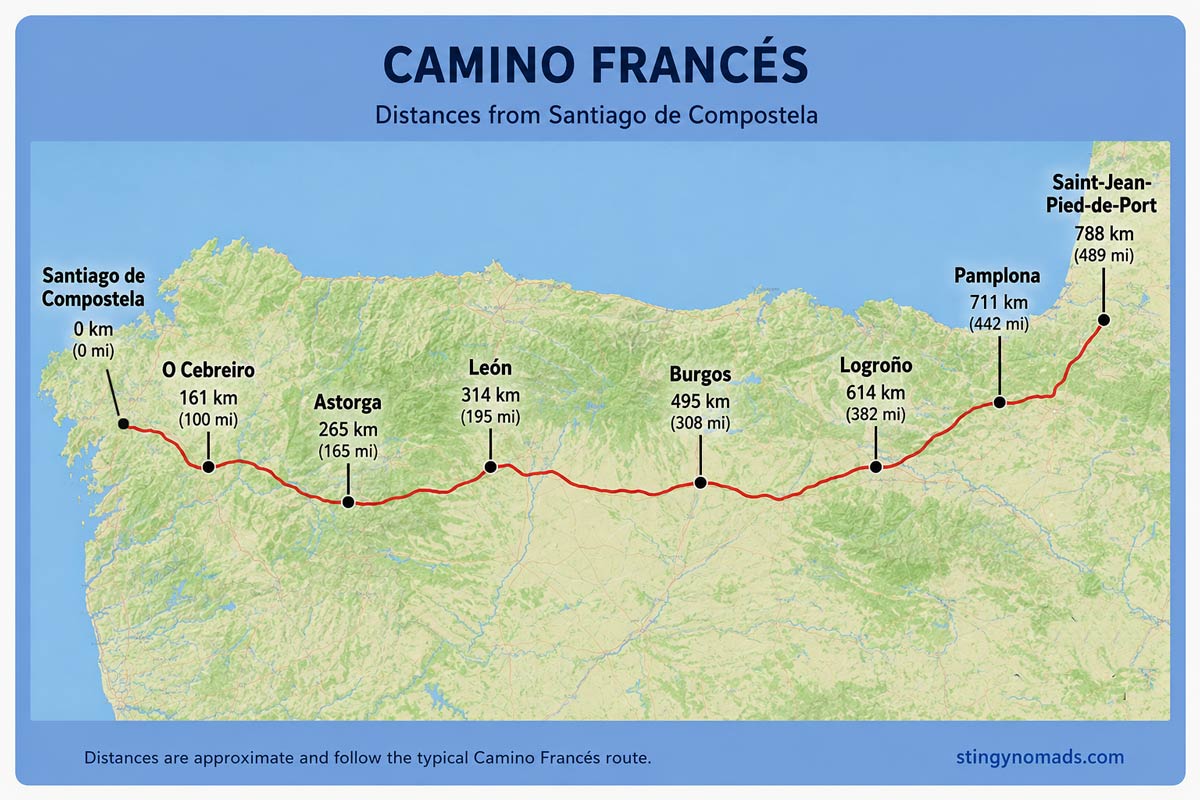
It depends on what you want to see and experience. On the French Camino, you don't see the sea the route goes inland from Saint-Jean-Pied-de-Port in France to Santiago de Compostela. The Northern Way follows the coast, it doesn't mean you see the sea every day for weeks but you do walk quite a lot next to the ocean, past unspoiled beaches, and breathtaking look-outs.
On the other hand, the French Way has more infrastructure and many more public albergues than the Northern Way which makes the walk cheaper. In general, the Northern coast of Spain is more touristy and as a result more expensive than the inland regions. After walking both routes I can say that the Northern Way is more expensive than the Camino Frances but the scenery is more impressive on this route.
You can find more answers to your questions in our Camino de Santiago FAQ post.
Camino planning resources
- Get useful tips for planning the pilgrimage | The best Camino de Santiago tips |
- Find out which churches along the Northern Camino offer Masses | Mass on the Way of St.James |
- Learn about the history of the Way of St.James | History of the Camino de Santiago |
- Must-try food in the Basque Country | Basque Country Cuisine |
Questions or Comments?
Got any questions or comments? We would love to help! All questions and comments will be answered by us personally in Buy Me a Coffee. Click below and ask away.
Feel free to support our site by buying us a coffee!

The pretty half of Stingy Nomads, responsible for all our land adventures (hiking, climbing, walking the Camino) and following them write-ups. Alya loves walking since she was a child, she prefers to walk 1000 km with a backpack rather than to do a 10 000 km road trip (actually any road trip). Alya is a big fan of Latin America, the Spanish language, and dancing. Every time we go away she desperately misses our dog Chile.

Hello,
Do most people book their accommodation for the whole trip in advance? I can't know when I'll want to take a rest day or want more time to explore a city so I'd prefer not to be a slave to a schedule, but I can't figure out if I'm going to have a difficult time booking on the fly, especially during peak season (mid May- mid June). Are most private albergues open to taking a reservation same day or one day in advance? Love your site and appreciate all the info! Thank you <3
Hello Jessica. Thank you for the comment. Some people do book accommodation in advance some prefer to stay in public albergues which can't be booked. Private albergues are open for booking at any time if there is availability you can book a bed on a day. I would suggest looking through PDFs that you can find in this post and planning your walk the way that you stay in public albergues as much as possible. In bigger cities and towns with many places to stay finding a bed in a hostel/albergue shouldn't be a problem even in May-June but in small towns with limited options, it might be difficult. We never booked anything on the Northern Camino but we walked it in October. You can start the walk without booking anything in advance and see how it goes if, after a couple of days, you realize it's difficult to find a place to stay then you can start booking places not weeks but maybe a couple of days in advance. In the worst-case scenario, you'll have to take a taxi or a bus to the nearest available hotel but it doesn't happen often.
Buen Camino
Hi, just found your sooo fantastic guide. I have done Caminho Frances and in the beginning of may I do the first half of Caminho Português, in autumn the other half. Then I’ll continue with one after the other:-) as I love walking. And I will be happy to read all your advices and recommendations. Thankyou.
Hello Viveka. Thank you for the comment. We're glad you're enjoying the Camino so much that want to walk more routes. The Portuguese Camino is a nice route to walk we really liked it and going to walk it again this year.
Buen Camino
Hello - do you have any guidance for doing Norte on a bike? I heard some stages are quite challenging. Also wondering about linking up with Frances either from Bilbabo or Santander
Hello Joann. We don't have any guides on cycling the Camino del Norte. We did it on foot.
Cheers
Excellent resource, thank you!
I have done 4 caminos, and am looking so forward to the Camino Norte. I plan on doing it in May, is this a good time? Also, I have a fear of heights, even though I walked the whole Appalachian Trail. I am fine walking in mountains, but not on the edge of cliffs. Are there any narrow parts where one must walk near the cliffs edges?
Thank you again, Pamela
Hello Pamela. Thank you for the comment. May is a good time for walking the Northern Camino though it's possible you'll get some rain. I can recall the trail going on a narrow path close to the edge of the cliffs in two places: on the first day the last stretch from Pasaia to San Sebastian and the stretch between Guemes and Santander (day 11).
Buen Camino
Thank you so much for sharing all this information - it's absolutely amazing!!
We are planning to do the Camino Del Norte - Camino Primitivo starting around April 24 of 2023. I've read through the 'places to stay' links and it sounds like many albergues are closed for various reasons. How do you check if they're open before going? What do you think the likelihood is that you could end up in a town with absolutely no options for somewhere to stay? I'm worried about being able to find accommodations!
We also will be travelling with someone who is severely allergic to peanuts - do you have any experience with food allergies on the trip? We were thinking to just try to eat only from supermarkets/home cooked food ourselves to ensure there is no cross-contamination - does that sound feasible?
Thank you again for your expertise and help!
Hello Alana. Thank you for the comment. Some albergues (mostly municipal) on the Northern Camino are currently closed but they might open for the next season. Some are closed for renovation some are still closed due to Covid. April is not the season yet for Northern Spain even if some albergues are closed you'll be able to find private accommodation for reasonable prices. It's unlikely that there will be no place to stay. It never happened to us and we've walked 7 Camino routes. It does happen sometimes during the peak season when people arrive too late and there are no beds available but even then there is always a solution. In the worst case, you'll have to take a taxi to get to the nearest hotel and a taxi to get back the next day. I regularly update our Camino posts and will do so next year. You can check closer to April some albergues will reopen.
We don't have any experience with walking the Camino with allergies. We did meet some people with allergies or a special diet (e.g. vegan) and most of the time they cook for themselves. Most albergues have a kitchen making food is not a problem.
Buen Camino
Hi...nice article that helps a lot of first timers like me. Me (51) and my wife (48) are average hikers but will be the first time to try the Camino. We decided to try the Camino del Norte on the 3rd week of October starting from San Sebastian only until Bilbao. After seeing some of the reviews I'm now having second thoughts. Any advice would be very helpful...thanks.
1) I know weather is very unpredictable but is it a good idea to do this in the middle of October? Will it be too cold?
2) Are websites like caminoways etc that offer their services like helping you with the luggage transfer/accommodation/food advisable? I know it can get pricey but they do seem to help at least make the journey easier.
3) I read somewhere that between San Sebastian and Bilbao it is positively dangerous in many sections to walk after rain or when it is raining. It is much harder compared to other Caminos with very steep and long ups and downs. Also the path between Deba and Markina is not for the faint hearted.
Hello, John. I answered your question about walking the Northern Way end of October as a reply to your previous comment. I can repeat that it's very likely you'll get a lot of rain at that time of the year in Northern Spain. It won't be too cold rather chilly around 10C but it'll be unpleasant to walk in the rain.
We have never used any companies on any Camino routes. We prefer to have the flexibility and not to book accommodation for the entire route in advance. Anything can happen on the Camino. As far as I know, they don't arrange your food only luggage transfer and accommodation. It's easy to arrange a luggage transfer on your own through one of the companies e.g. Correos.
I don't recall any dangerous sections on the Northern Way between San Sebastian and Bilbao. You don't walk on the edge of the cliffs anywhere. It might be muddy if it rains a lot but as I mentioned above it's a drawback of walking this Camino route in late October. I'm not sure why the stage between Deba and Markina is not for the faint-hearted? There was a short stretch of walking next to the road with little traffic other than that I can't think of anything potentially dangerous.
Buen Camino
Hi! Thank you so much for this amazing guide! My husband and I are headed to the Camino del Norte for our honeymoon in mid June and are so excited, if also a bit overwhelmed. We'd love some advice on where to stay for a few nights after we are done. We will be flying out of Barcelona so something near-ish (within an hour or two) and on the beach to relax and recover would be great! Thanks again!
Hello, Andrea. Thank you very much for the comment. What a great way to spend a honeymoon! I'm sure you'll enjoy the Northern Camino it's a very beautiful route. As for your question we've never gone on a beach holiday in Spain, I can't recommend it from my personal experience but I know Lloret de Mar is a popular beach town place on the Costa Brava. It's about a 1-hour drive from Barcelona. It has a nice sandy beach, beautiful gardens, and a castle. I'd look into it if not there are several smallish beach towns north of Barcelona along the coast that might be a good option.
Buen Camino
Hi
Thank you very much for providing all this important information for a Camino newbe. It's also fantastic that you take the time to respond to all the comments below. I aim to go in 2022 from Santander [time being an issue] have you any advice on how I could get back to Santander
Hello, John. Thank you for the feedback! You can take a bus from Santiago to Santander. It's quite a long ride about 9 hours, it's a direct bus. Check for times and tickets on the ALSA website. There is no direct train with a switch and waiting time it takes longer than a bus. There are no direct flights either. Looks like taking a bus is your only option.
Enjoy the Northern Camino, it's a stunning route!
Hi guys,
Thanks for this super informative blog! It is really inspiring. As we don't have time to do the whole route on foot, and at least one of us has some knee issues, we are thinking of going in a group of 4, and renting a car. The plan would be that one person drives the route on each day, and the other 3 walk. Whenever someone is tired, they can ride in the car and the others walk, and the person with the knee problems could skip the tougher parts. Is this feasible? Is the route always quite close to roads? Thanks!
Hello, Mary. Thank you for the comment! I believe it's possible the route doesn't always go next to the road but I don't see it as a problem whether you walk or drive you'll start and end in the same places. The only thing is the person who drives will be there in an hour or so, daily distances a between 20km and 25km and he/she will have to kill some time at a cafe or restaurant because check-in in most albergues and hotels is after 12pm. It might be a bit boring to sit every day alone waiting for the rest of your group but there are many nice places along the route that the Camino doesn't go through you friend can do some sightseeing on the way. One more thing the person who drives might be not allowed to stay in public albergues because those are only for pilgrims who walk or cycle the Camino but private albergues and hotels won't have any problem with it. I hope it helps!
Buen Camino!
Hey guys! I love the super detailed post! 1 thing I've been looking for all over that I couldn't find is how long do you roughly walk for in a day? I'd love to go in September 2021 and wanted to know if it would be possible to work from say 8am-12pm and then go walk for 5-6 hours and make it to the next spot!?
Hello, Dominik! Thank you for the comment! You check distances in this post https://stingynomads.com/northern-way-camino-de-santiago-stages/ I'm sure you can calculate how long it'll take you to walk based on your walking pace. Some people walk 20km in 6 hours, some in 4 hours. Keep in mind that check-out at many places on the Camino is between 8am and 9am you'll have to find a restaurant or a cafe to sit and work. I think it's easier to walk in the morning, be done by 12pm and work for the rest of the day, at least we usually do it this way.
Buen Camino!
Hello, I am planing to go on Camino del Norte in September. Could You share what is the price for albergue in general. I am looking in internet, but it is so high - 20 and more euro
Thank You
Hello, Vania! There is a whole paragraph in this post "Camino del Norte cost" where I elaborate in detail how much you pay for public and private albergues and hotels in different regions along the Camino route. Please, read it.
Buen Camino!
Hi Guys, thanks for your posts, they really help a lot.
One thing I'd like to ask, wud you suggest to bring cash only, or 1/2 cash + 1/2 credit card, or 10% cash + 90% credit card etc ?
Regards
Hello, Sam! Thank you for the comment! You can find ATMs almost every day on the Camino del Norte no need to carry a lot of cash with, many albergue (not municipal albergues, there you can pay only cash) and restaurants accept cards as a payment method. We used to draw 150-200 Euro every once in a while to have some cash but it wasn't a big problem on the Camino just check from time to time how much money you have left and if you need to draw more.
Buen Camino!
I am planning on walking Camino del Norte in 2021. I plan to leave mid March. Will I find alberges open at this tme?
Hello, David! Most albergues open in March some at the beginning of the month, some a bit later around mid-March.
Hello
I have walked the French Camino and the Portuguese one from Porto to Santiago. I would like to walk for about two weeks on the northern route starting in Irun on October 26th. I like walking in temperatures about +18-20- live in the mountains of Canada and find doing elevation in cool weather better. . I am wondering if there will be some Alberques still open or if it is too risky. I would appreciate your advice please
Hello, Gloria! Most municipal albergues on the Camino del Norte will be closed in November, we walked this route in October and many were already closed. I believe some private albergues and hotels will be still open. As for the weather in November the average temperatures in Northern Spain are between 10°C and 15°C not 20°C and it rains a lot this time of the year. I finished the Camino Frances three weeks ago and by the end, it started getting chilly and rainy.
Good luck!
Hi!
Thanks for getting back to me and also the suggestion of the Portuguese Way. I will definitely look it up. Enjoy the rest of your Camino Frances - you're almost out of the meseta. It gets a lot more scenic just past Astorga, there's also a fascinating bishop's house there built by Gaudi which is worth a look.
Buen Camino!
Hi guys,
Not sure if you still check the comments on this?! Firstly, thanks for such an insightful post with so much info. I'm planning on doing the Northern Camino solo in October this year (I walked the French Way about 6 yrs ago and wanted something a little more off the beaten track). However, I will actually be 5-6 months pregnant... didn't exactly plan that one! I'm pretty fit (currently living out on a farm and walking 3 kelpies through bushland everyday) but I'm wondering were there any particularly strenuous/steep sections on the way or any sections where water stops were few and far between? I know the accomodation on the Northern Way is a little more spaced out so I'm trying to roughly map out an itinerary before I head off. I need to be a little more prepared with this little passenger than if I was winging it on my own.
Cheers!
Hello, Laura! Thank you for the comment! I'm currently walking the Camino Frances (near Leon right now) and from what I've seen I can say that the Northern Way is more challenging with some steep ascents and descents along the way, longer distances between albergues and food places. In October (we walked in last year in October) many places (albergues, some restaurants in beach towns) will be closed, some days you'll have to carry more water and some food. To be honest I don't think this is the best route to walk if you're 6-month pregnant. Have you considered the Portuguese Camino from Porto, it's very flat, there are many small towns on the route and the weather might be better there than in the North of Spain but it's totally up to you.
Buen Camino!
Hi There,
I am thinking of doing the Camino Norte. I already did the Camino Frances in 2015. I was wondering roughly how much of the Camino is in the mountains. I don't mind a bit of mountains, but if it is a lot, I might have to reconsider. Also, how much of the Camino is along the highways? I absolutely hated walking along the highways in the Camino Frances. The pavement is hard, I saw a dead snake, and I was afraid I would be hit. Thanks!
Hello, Denise! The Camino del Norte does have some ascends and descends on the route but it's not really mountains more of the hills and cliffs, most ups and downs we got in the first part of the walk, in the Basque Country. There were some parts of the walk next to the road or on the road more details on the stages with a lot of road walking you can find in our Camino del Norte walking stages post. I'd say the most unpleasant stage was from Gijon to Aviles, many people take a bus to skip this part. I hope it helps!
Best wishes!
Hi! Great guide here! I really want to do the Northern Way, but only have 3 weeks' vacation. Which part could I easily skip? I know on the French way you can take a bus from one place to the next, is that possible on this route?
Thanks!
Hello, Marie-Helene! Thank you for the comment! The entire Camino takes about 30-34 days, you can do the same take buses or trains to cut off some parts but I can't say there was one part about 10 days long that you can completely skip, there were some "nothing special" days on the route but there were days that you don't want to skip. I'd suggest to cut off one or two days here and there. You can check our Camino del Norte stages posts to get an idea which places you would definitely like to see in general every day when the Camino passes close to the coast is a must see, inland parts you can skip here and there. I hope it helps!
Buen Camino!
Hi, in 2020 I'm backpacking around Europe for most of the year and am looking at doing this trail solo and was wondering if its worth buying tenting equipment and accessories (anything along those lines). From what I've read in your guide you seemed to have no problem finding adequate accommodation along the way. If my budget isn't too much of a factor, in your opinion, would it be worth having camping as an option or is that just dead weight I'll be lugging around when I could be staying indoors for the same cost?
Hello, Jeremy! We didn't see many campsites along the route, if I'm not mistaking most beaches have signs Camping not allowed so it' not an option. The Camino del Norte like any other Camino route has a network of budget accommodation for pilgrims - albergues, they can be found everywhere along the route. From our Camino experience it's not worth carrying a tent or any other camping gear (only sleeping bag) you'll end up staying in-doors most of the time.
Cheers!
We want to buy walking sticks in Aviles where we begin. Is there a place?
Hello, Jane! Aviles is quite a big city there must be shops that sell sport and hiking gear, I think you'll be able to find walking sticks. The best will be to ask in the albergue or hotel where you're going to stay. I'm not sure how you're planning to get to Aviles but if you come from Madrid, Barcelona or Gijon you can buy walking sticks in one of these cities, they all have big Decathlon stores.
Buen Camino!