Fishermen’s Trail vs Portuguese Camino (Coastal & Litoral Way)
Portugal’s Atlantic coast offers some of the most spectacular long-distance coastal hiking routes in Europe. The most popular are the Fishermen’s Trail and the Portuguese Camino Coastal Routes. At first glance, they may look similar — both follow the ocean, pass through small coastal towns, and promise dramatic sea views — but the experience on each trail is very different.

The Fishermen’s Trail is a rugged hiking route that follows ancient fishing paths along wild cliffs, spectacular ocean views and remote beaches, with limited infrastructure and long stretches of sand underfoot.
The Portuguese Camino is an official Camino de Santiago pilgrimage offering spiritual, cultural, and hiking experiences for pilgrims and tourists. The Camino de Santiago is a network of pilgrimage routes to Santiago de Compostela from all over Europe. The Portuguese Camino starts in Portugal with the option to walk next to the coast.

Stingy Nomads participates in the Amazon Services LLC Associates Program and other affiliate programs. If you click on the link and purchase the item or make a booking, we will receive an affiliate commission at no extra cost. Thank You for supporting us and assisting us to produce quality, free content.
The Camino de Santiago
The Camino de Santiago (Way of St. James) is an ancient network of pilgrimage routes leading to the tomb of St James in Santiago de Compostela in Spain. You can walk from anywhere in Europe to Santiago, and there are lots of different official routes walked by many pilgrims. While historically religious, these walking routes are now also popular for spiritual growth, fitness, and cultural immersion. On the official routes yellow arrow or scallop shell markers can be found every couple of hundred meters along the way marking the route.
If you walk the Camino de Santiago you are known as a pilgrim and you can earn a Compostela as proof of your journey.
To obtain the Compostela certificate in Santiago de Compostela, pilgrims must walk or ride a horse for at least the last 100 km (200 km for cyclists) of an authorized route, collecting at least two daily stamps in their official credential (pilgrim passport). These stamps can be obtained in most bars and cafes and accommodation on the way.
Albergues are special hostels were only pilgrims walking the Camino are allowed to stay.
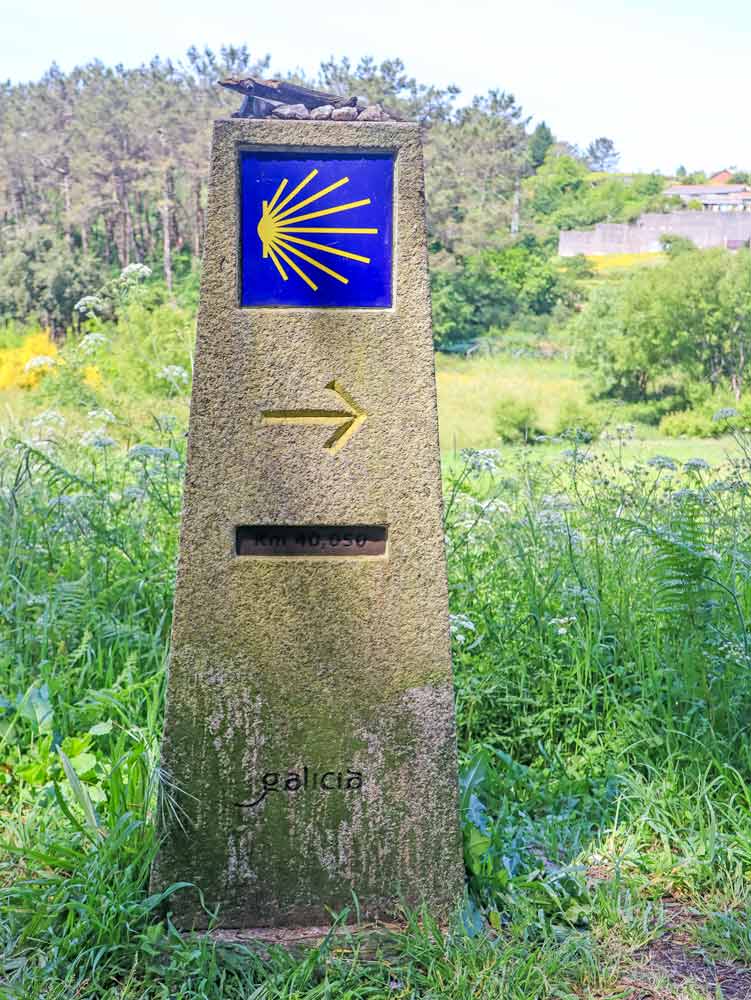
➜ Portuguese Camino
The Camino Portuguese is one of the spiritual routes to Santiago de Compostela and has 3 different route options the Central Route, Coastal Route and Litoral Way.
Walking the Portuguese Camino from Porto has two route options that go next to the sea; the Coastal Route and the Litoral Way (Senda Litoral). The main difference is that the Litoral Way sticks to the coast as much as possible when the Coastal Route often goes inland. Some stages of the Coastal Route are entirely inland. Both routes are similar, running parallel and overlapping. The Litoral Way sticks to the coast 80% of the time, while the Coastal way walks next to the ocean 30,5% of the time. Most of the main towns on the routes are the same. You can combine both routes and switch between them.
🏠Accommodation
There are a large variety of accommodation options on the Portuguese Camino routes including albergues, hostels and hotels/guesthouses. Albergues are special hostel accommodation for pilgrims on the Camino all along the way. You pay for a bed in a dormitory, not for a room. There are two types of albergues, municipal and private albergues. Municipal Albergues are the most basic and only pilgrims are allowed to stay here.
Download a list of Accommodation on the Litoral Way here.

💲Budget
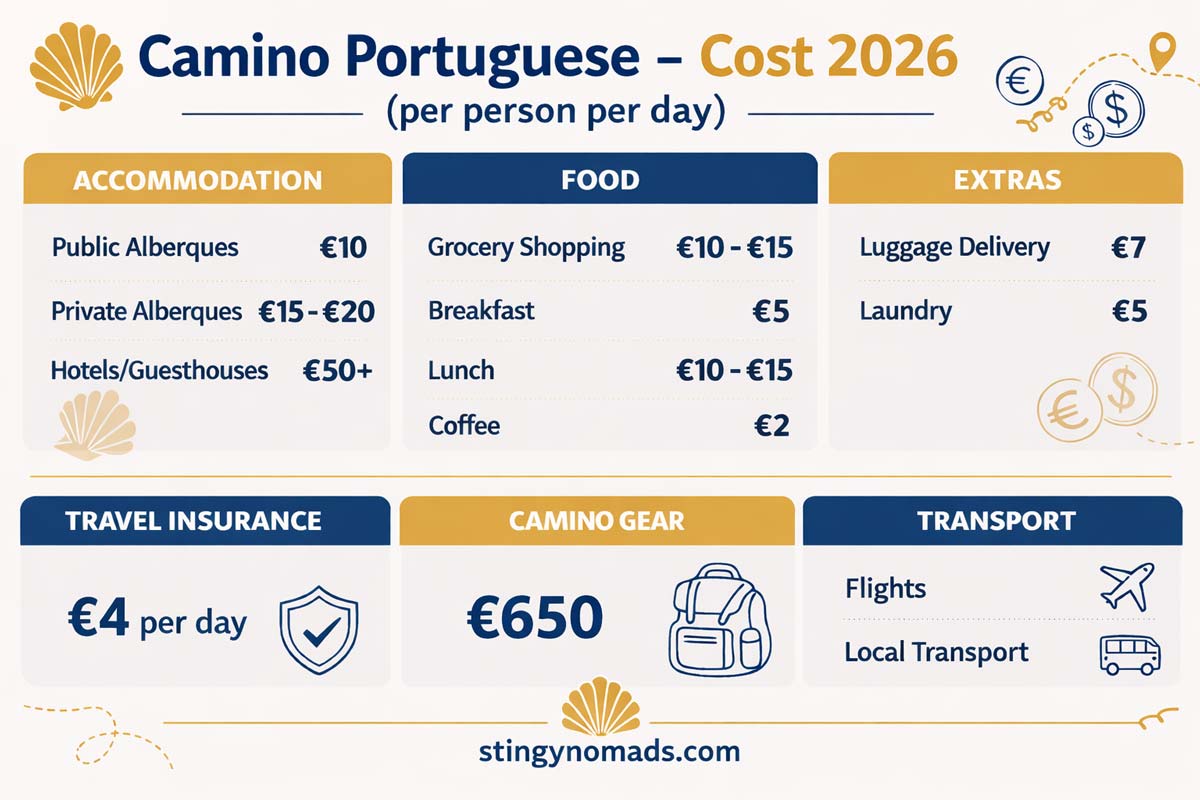
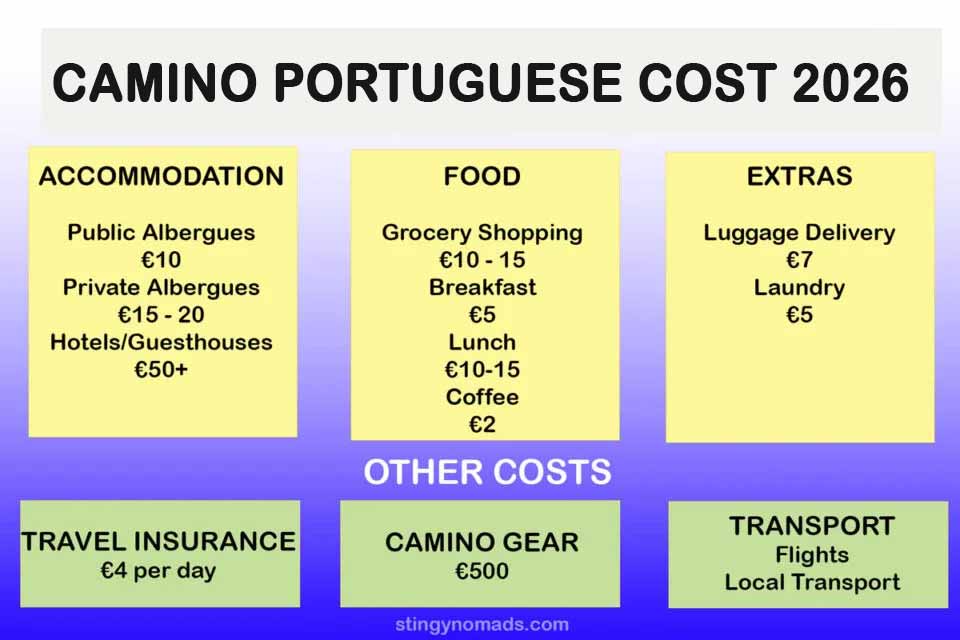
The cost of walking the Camino Portuguese is dependent on many factors Most pilgrims spend between €35 and €75 per day. If you are really on a tight budget and stick to public albergues it is possible to walk this pilgrimage on € 25 per day. You can determine your budget from the Camino budget diagram below.
- On a Budget – € 25 -40 possible, but you will have to spend very carefully
- Comfortable – € 40 – 60
- Very Comfortable € 70+
💼 Luggage Transfer
Luggage transport is a service that moves your main bag daily between accommodations, allowing you to walk only with a small daypack. This door to door pick up and delivery service between accommodation cost around € 7 per stage on the Camino. Tuitrans and Pilbeo offer luggage delivery between Porto and Santiago.
👣 The Litoral Way
The Litoral Way or Senda Litoral Camino route starts in Porto and goes along the coast al the way until it turns inland at Vigo.
🏞️Route Description
Starting in Porto, the way quickly leaves the city along the Douro River and joins wooden boardwalks, sandy beaches, and seaside promenades that continue north through popular coastal towns and fishing villages. The route is very flat with few hills. The litoral way has a lot less walking on cobblestones than other Camino Portuguese routes with more wooden boardwalks and trails, resulting in less stress on your feet.

💖 What we love about the Litoral Way
- Walking next to the ocean all day is incredible.
- There is a strong pilgrim community, you can expect many other walkers to share meals and experiences. It is busier and more urban than the Fishermen´s trail, but the Litoral way is not as busy as the Camino Frances or the other Portuguese routes from Porto.
- The scenery is spectacular.
- The route is flat with barely any hills.
- The promenades and flat trails are fairly easy to manage for most walkers.
- Quiet & Peaceful Route, less crowded than more popular Camino routes.
- It is a safe and easy path with many cafes, shops, train/bus links, and pilgrim support along the entire way.
⚠️ Challenges
The official Camino routes are well marked with a shell or arrow every couple of hundred meters. The Litoral way is not very well marked with route markers not being very frequent. The route is however easy to navigate, just walk next to the ocean.
For navigation with your phone you can use our Litoral Way Google Maps trail.
📍 Route overview
- Distance – 280 km/173 mi
- Number of days (stages) – 12-15
- Starting point – Sé Cathedral, Porto, Portugal
- Finishing point – Santiago de Compostela Cathedral, Spain
- Difficulty level – moderate
- Total ascent – 2975 m (half of it 1500 m on the last 4 stages to Santiago on the Central Route)
- Total descent – 2705 m
- Walking surface – Terrain: Mix of promenade sections, beaches, boardwalks, footpaths, cobblestones and asphalt (tar road).
- Average cost – 25-30 euros per day per person (staying in albergues), from 40 euros per day per person (staying in hotels)
🌅 The Coastal Route
The Coastal Route of the Portuguese Camino offers a blend of Atlantic coastline, historic towns, and inland countryside. Starting in Porto the walking route goes along the coast till it reaches Vigo. It merges with the Central Route in Redondela. In 2024 about 44% of pilgrims who completed the Portuguese Camino walked the Coastal Route. Despite the name the majority of this route goes through the country side, forests and towns with only 30% of the route (between Porto and Redondela) following the coast.

🏞️Route Description
The first stage of the Coastal route is an inland route through the city and some industrial areas, most pilgrims walk the more pleasant Senda Litoral stage out of Porto. The rest of the route follows a mix of seaside paths, boardwalks, and quiet roads through fishing villages and coastal resorts, combining sea views with forest paths, rural landscapes, and historic centers. Many pilgrims enjoy the balance between coastal scenery and cultural interest combining sea views with forest paths, rural landscapes, and historic centers. The terrain is generally easy to moderate, with mostly flat walking and gentle hills, making it suitable for a wide range of pilgrims. It is more challenging than the Litoral way. The Coastal route has more walking on cobblestones and less on boardwalks than the Litoral Way making this route quite tough on your feet.
Download a list of Accommodation on the Coastal Route here.
💖 What we love about the Coastal Route
- Coastal and Forest Scenery: The route offers nice views of the Atlantic Ocean, mixed with forest and countryside scenery when turning inland
- Charming Coastal Villages: The path winds through small villages with cafes and other facilities.
- Flexibility & Infrastructure: The route is well-marked and supported, with many options for lodging
⚠️ Challenges
If you want to do a coastal hike, only a third of this route is next to the ocean. This route has more hills than the Litoral Way making it a bit more challenging to walk. The coastal route has a significant amount of walking on the road.
For navigation with your phone you can use our Camino Portuguese Coastal Route Google Maps Trail
📍 Route Overview
- Distance – 274 km/170 mi
- Number of days (stages) – 12-15 days
- Starting point – Sé Cathedral, Porto, Portugal
- Finishing point – Santiago de Compostela Cathedral, Spain
- Difficulty level – moderate
- Total ascent – 3990 m
- Total descent – 3716 m
- Walking surface – Terrain: Mix of promenade sections, beaches, boardwalks, footpaths, cobblestones and asphalt (tar road).
- Walking along the coast – 77,5 km/ out of 274 km/170 mi. The last 86 km/53,4 mi to Santiago are inland on the Central Route.
- Average cost – 30 euros per person per day if staying in albergues, from 40 euros if staying in hotels
🌊 The Fishermen’s Trail — Wild Coastlines & Quiet Beaches
What it is: The Fishermen’s Trail (Trilho dos Pescadores) is a multi-day coastal hiking route that follows narrow paths used for centuries by local fishermen to access secluded, rocky fishing spots along the Alentejo and Algarve coast. It forms part of the Rota Vicentina network and runs through protected natural areas where development is limited and the landscape feels raw and untouched. Unlike the Camino de Santiago routes, the Fishermen’s Trail is not a pilgrimage path and has no religious significance, pilgrim passports, or albergue system. Instead, it offers a more adventure-focused hiking experience, with narrow cliff-top paths, long stretches of sand, windswept beaches, and dramatic Atlantic views.
🏞️Route Description
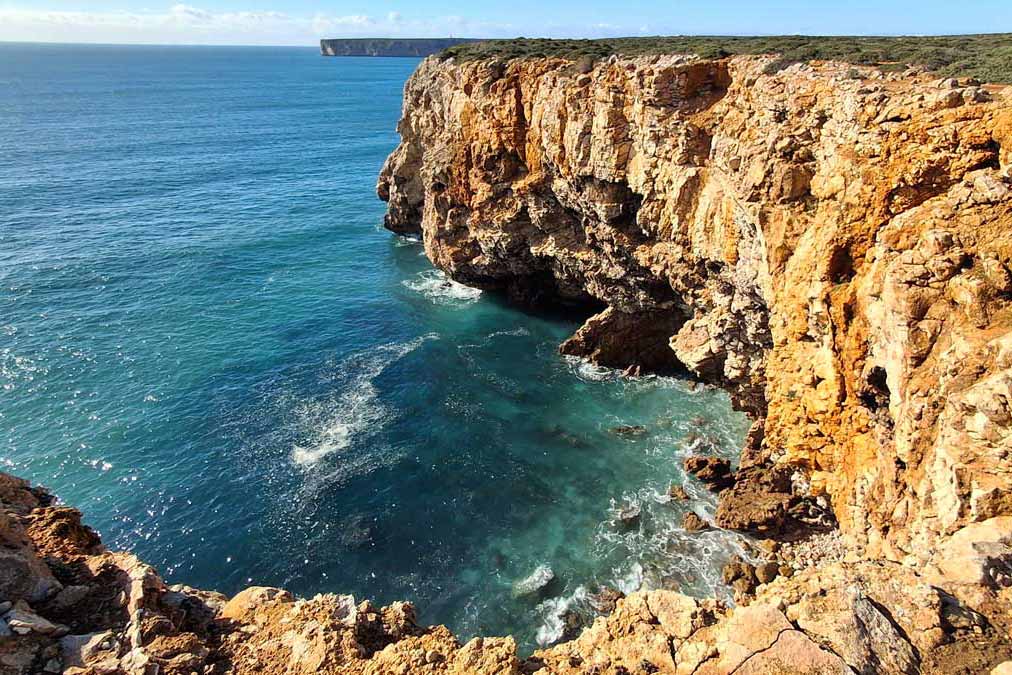
The Fishermen´s trail is a challenging coastal hike known for its raw landscapes and exposed terrain. Walkers follow sandy tracks, cliff-top paths, and rugged trails high above the ocean, with constant sea views and powerful waves below. Some sections involve walking on deep sand, making the route physically demanding despite relatively short daily distances. The trail passes through quiet fishing villages, unspoiled beaches, and protected natural areas within the Southwest Alentejo and Vicentina Coast Natural Park. Waymarking is clear, but facilities between towns are limited, requiring careful planning.
📍 The Trail Overview
- Total distance – 230 km/143 mi
- Number of days – 11-13 days
- Starting point – S.Torpes Beach, 10 km before Porto Covo, Alentejo
- Finishing point – Lagos, Algarve
- Total ascent – 4418 m
- Total descent – 4414 m
- Route marking – wooden poles with blue & green stripes
- Average cost – 40 Euros per person per day
- Accommodation options – camping, hostels, hotels
- Terrain: Cliff paths, beaches, dunes, sandy tracks
- Difficulty: Moderate — mainly due to daily distances and lots of sand underfoot
We have a detailed Fishermen’s Trail walking itinerary post where you can find complete information on each stage of the trail with distances, elevation profiles, times, and accommodation options.
💖 What we love about the Fishermen´s Trail
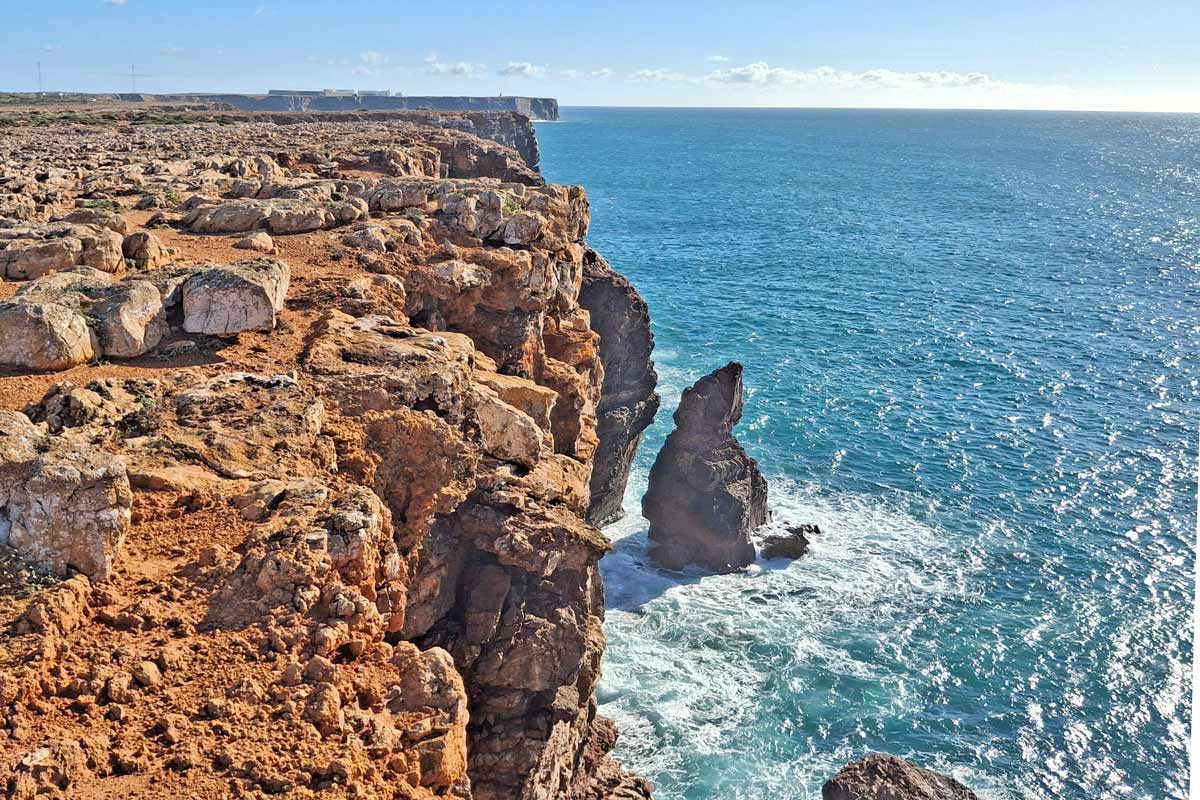
- Natural beauty: Dramatic cliffs and wild Atlantic beaches that feel removed from “normal life.”
- Quiet: Fewer crowds than the Camino routes.
- Perfect for outdoors lovers: If you want rugged coastal landscapes rather than historical churches and urban albergues.
- Endless, near-empty beaches and cliffscapes.
- Fishing villages that haven’t fully turned into tourist traps.
- More “adventure-style” hiking than pilgrimage.
⚠️ Challenges
- Less infrastructure than the Camino — fewer hostels, sometimes long stretches without cafes.
- Sand can be slow and energy-sapping, especially in midday heat.
- Some steep climbs are challenging, particularly on hot days.
- Long days with no facilities on the way, you have to carry enough water and snacks.
- Small towns on the coast has less accommodation, have to book accommodation ahead.
- While waymarking is generally good, a GPS app or offline map helps.
- Google Maps Trail for Fishermen´s trail

🏠Accommodation
There is a variety of accommodation available on the Fishermen´s trail including hotels, guesthouses, hostels with dormitory beds and campsites. See our complete list of places to stay along the route. The trail is popular and towns are mostly small so I would recommend accommodation ahead, especially if you hike in summer (June to September) or if you are on a tight budget. Be aware accommodation is more expensive in season.
Wild camping is not allowed on the Fishermen´s trail and campsites can be found in Porto Covo, Vila Nova de Milfontes, Zambujeira do Mar, Odeceixe, Aljezur, Sagres, and Salema.
💼 Luggage Transfer
Luggage transport is a service that moves your main bag daily between accommodations, allowing you to walk only with a small daypack. This door to door pick up and delivery service between accommodation coast around € 15-20 per stage on the Fishermen´s trail using Vicentina Transfers.

💲Budget
Most hikers have great experience on the Fishermen´s trail on a mid-range budget (€60–80 per day) — comfortable rooms, three meals, some drinks, and a bit of flexibility. See our complete Fishermen's Trail Budget breakdown.
- On a Budget – € 35 – 55 possible
- Mid-range – € 60-80
- Very Comfortable € 100+
Here’s how your daily cost breakdown for the Fishermen´s Trail
| Style | Accommodation | Food | Extras | Daily Total |
|---|---|---|---|---|
| Budget | Hostel / Camping €20–30 | Self-cater €10 | Extras €5 | €35-55 |
| Mid-Range | Private room €40–60 | Cooking & restaurants €15–25 | Drinks €5 | €60–80 |
| Comfort/ Luxury | Hotel €80–150 | Restaurant €30 | Luggage transfers €15 | €120–160+ |
🎒 Choosing your route
- Want total immersion in nature? Go Fishermen’s Trail. The community is quieter, and services are more spaced out, but the scenery is unforgettable.
- Want ease, more accommodation options, and Camino culture? The Portuguese Coastal Route is your best bet. The route is clearly marked with many other pilgrims on the way.
- Looking for a pilgrimage route next to the sea? The Litoral Way is the sweet spot.
⚖️ Side-by-Side at a Glance
| Feature | Fishermen’s Trail | Portuguese Camino (Coastal) | Litoral Way |
|---|---|---|---|
| Official Camino? | ❌ | ✅ | ✅- route variant |
| Scenery | 🏖️ Wild cliffs & hidden beaches | 🌊 Coastal + Forest scenery | 🌊 Amazing Ocean views |
| Crowd Level | 🧍♂️ Low | 👣 Medium–high | 👣 Medium |
| Budget-friendly | ✅ with planning €45+ | ✅ €25+ | ✅ €25+ |
| Albergues/Hostels | Limited | ✅ | ✅ |
| Route Markings | ✅ Well marked- Green & Blue stripes | ✅ Well marked- Camino markers | ❌ Not well marked |
| Navigation ease | ✅ | ✅ | ✅ |
| Best for | Nature lovers, hikers | Pilgrims seeking community | Pilgrims seeking sea views |
| Typical daily cost (includes stay & food) | €60–80 per day | €40-60 per day | €40-60 per day |
☀️ Weather & timing
- Spring (Mar–May) & early Autumn (Sep–Oct) hit the sweet spot with mild temps and fewer crowds on all these routes.
- Summer can be hot on the Fishermen’s Trail — sand + sun can drain energy fast.
- Coastal routes all go through holiday towns that get very busy in summer (June -Sept), I will recommend that you book accommodation ahead.
Whatever you choose, pack smart, book when needed, and enjoy the journey over the destination — that’s the true spirit of these paths. 🌍
Questions or Comments?
Got any questions or comments? We would love to help! All questions and comments will be answered by us personally in Buy Me a Coffee. Click below and ask away.
Feel free to support our site by buying us a coffee!
The strong half of Stingy Nomads, a nomadic aquaman that would be happy to spend all his life in the water diving, surfing and spearfishing but often has to compromise with Alya and go hiking instead. Campbell is responsible for all our marine adventures and following them with write-ups. He loves traveling, braai (BBQ in South Africa), red wine and spending the day in a wetsuit.