
Best Towns for a Rest Day on the Portuguese Camino
Walking the Portuguese Camino de Santiago is an unforgettable journey—whether you’re following the inland Central Route, hugging the Atlantic on the Coastal Route, or exploring the scenic Litoral Way. Taking a rest day in the right town can make or break your experience. A well-timed rest day helps your body recover, prevents injuries, and gives you a chance to truly enjoy the culture, food, and atmosphere of Portugal and Spain.

In this guide, we break down the best towns to take a rest day on each variation of the Portuguese Camino.
Also, see Our Favorite Towns on the Camino Frances.
Stingy Nomads participates in the Amazon Services LLC Associates Program and other affiliate programs. If you click on the link and purchase the item or make a booking, we will receive an affiliate commission at no extra cost. Thank You for supporting us and assisting us to produce quality, free content.
The Portuguese Camino de Santiago
The Camino de Santiago is a network of pilgrimage routes that start in different places across Europe and finish in Santiago de Compostela, Spain. There are several variations of the Camino Portuguese. Porto and Tui are the most popular starting points for the Portuguese Camino.
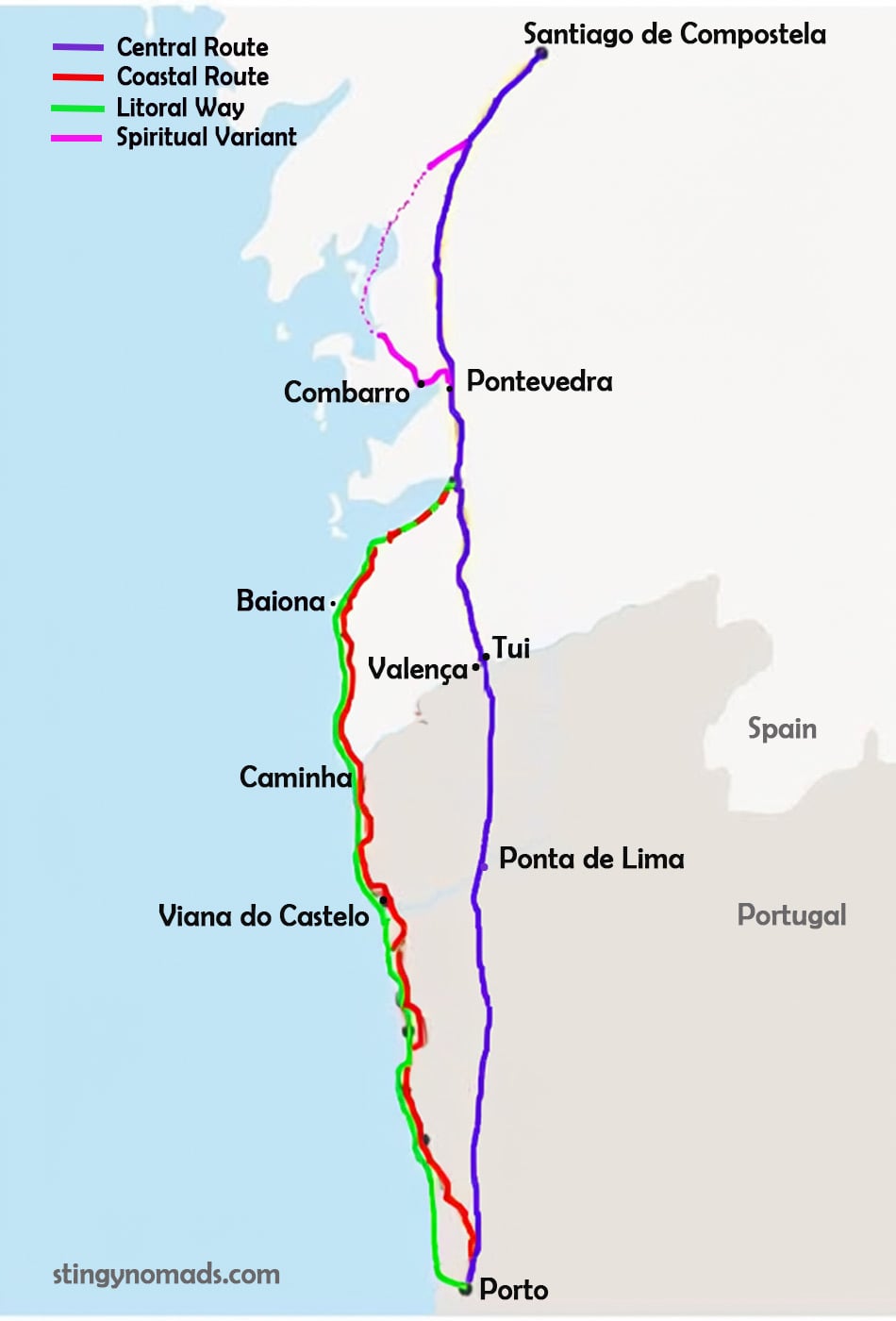
Three different Portuguese Camino routes start in Porto. You can follow the Central Route (260 km/161 mi), the Coastal Route (280 km/173 mi) hugging the Atlantic Ocean, or the Litoral Way (280 km/173) mi that crosses from the Central to the Coastal Route.
Popular Towns for a Rest Day
Take a break after walking about 5 Days - On the Central Route of the Portuguese Camino, Ponte de Lima a couple of days walk (about 90 km from Porto), with it's peaceful riverside setting, and relaxed small-town atmosphere is perfect for recovery. On the Coastal Route, Viana do Castelo is a good rest day stop combining culture and coastal beauty. It’s lively yet relaxed—perfect for a day off.
Rest halfway - Tui and Valença do Minho are great towns to take a break around the halfway mark between Porto and Santiago de Compostela on the central route. Baiona is a very nice and relaxing place to take a longer break when reaching this milestone on the coastal route.
Take a break after walking about 10 Days - Pontevedra—approximately 70 km to go to Santiago is a top rest stop shared by both the Central and Coastal routes, making it one of the most popular and convenient places for pilgrims to take a well-earned break. It’s a great place to enjoy good food, soak up Galician culture, and recharge before the final stretch.
Walking the Spiritual Route? - Pontevedra with its pedestrian-friendly old town offers a relaxed atmosphere to prepare for the spiritual variant. The unreal fishing village Combaro on the spiritual variant is one of the most beautiful little towns on the Camino Portugues.

Disclosure: Stingy Nomads take part in the Amazon Services LLC Associates Program and several other affiliate programs. We earn advertising fees by advertising and linking to Amazon.com and other affiliate partners. If you click on the link and purchase the item or make a booking, we will receive an affiliate commission at no extra cost for you. Thank You!
🥾 Portuguese Camino Central Route (Inland)
The Central Route is the most popular option, passing through historic towns, vineyards, and countryside. It has excellent infrastructure, making it easy to plan rest days.
Ponte de Lima (Central Route)
Often referred to as "most floral town of Portugal" the picturesque Ponte de Lima is the oldest town in Portugal. You will walk into town on the Camino with your fellow pilgrims on a famous 2000-year-old medieval Roman bridge, Ponte Romano, crossing the Lima River. The town is located relatively close to Barcelos, it is significantly smaller and is known as one of the most beautiful small towns in Portugal.
Ponta de Lima has some interesting sights to see; Ponte Romano (The Roman bridge over the Lima River), Old Chain Tower, Matriz church, the Botanical garden Paço do Marques, and the church of Santo Antonio da Torre Velha. There are many nice accommodation options in the town.
Why take an extra day in Ponte de Lima:
Set along the Lima River, its postcard-worthy setting, cobbled streets, and relaxed pace make it ideal for slowing down after several walking days. The atmosphere is peaceful yet lively enough to enjoy cafés, local food, and riverside strolls. It’s a place where many pilgrims choose to pause, recover, and fully soak in the Camino experience.
- Scenic riverside setting perfect for rest and gentle walks
- Wide choice of accommodation and good pilgrim infrastructure
- Calm, relaxed atmosphere ideal for recovery
Highlights of Ponte de Lima:
- Iconic Roman-medieval bridge over the Lima River
- Beautiful historic center with traditional architecture
- Riverside parks and walking paths for a peaceful break
Places to stay in Ponte de Lima
- Budget | Old Village Hostel |
- Middle price | Graciosa Guest House | Casa Cardeal Saraiva | My House |
- High-end | Arc My Otel | Alma da Vila |

Valença do Minho (Central Route)
The unique town of Valenca is located on the banks of the Minho River, which separates Portugal from Galicia in Spain. The highlight of Valença is the beautiful medieval fortress Fortaleza de Valença, with the old town located behind the fortress walls.
The impressive fortress was built to protect Portugal from invading Spaniards on the other side of the River Minha. The cobblestone streets of the functioning town enclosed by 5 kilometers of defensive walls are fun to explore leading to cathedrals, churches, chapels, and museums. Take some time to look at the impressive walls surrounding Valença do Minho. In the evenings the streets are crazy busy and we had a great time shopping and sitting at a local cafe people watching and listening to buskers play some popular music. Some of the highlights among the narrow stone-paved streets are the old buildings, the churches Igreja de Santo Estevão; Capela Militar do Bom Jesus and Igreja de Santa Maria dos Anjos, and loads of restaurants, cafes, and souvenir shops.
Why take an extra day in Valença do Minho:
Valença do Minho is a fantastic place to take an extra day on the Portuguese Camino, especially as a final stop before crossing into Spain. Inside the fortress walls, you’ll find narrow streets filled with shops, cafés, and local products—perfect for a relaxed day of exploring. It’s also a great place to pause, reflect, and prepare for the next stage toward Tui.
- Strategic location before entering Spain
- Great shopping for local goods and souvenirs
- Relaxed pace with plenty of cafés and viewpoints
Highlights of Valença do Minho:
- The impressive fortress and its panoramic river views
- Walk along the walls overlooking Spain and the Minho River
- Easy stroll across the bridge to nearby Tui
- A Day Tour to Valença do Minho and Santiago de Compostela from Porto is a very popular activity in Portugal.
Places to stay in Valença
There are many places to stay in Valença on different budgets including a public albergue.
- Budget | Public albergue São Teotonio | Alvorada Medieval |
- Mid-range | Alojamento da Vila | Residencial Portas do Sol |
- High-end | Domus Avocat |

Tui (Central Route)
On the Spanish side of the Minho River sits the town Tui opposite Valencia de Minho located on the Portuguese side of the river. An iron bridge crossing the river, designed by Eiffel, links the two towns. You can walk or drive between Portugal and Spain over this bridge. The town winds uphill to the impressive hilltop cathedral with Romanesque and Gothic elements.
Prepare to climb some stairs exploring this beautiful old town area. Tui is a popular starting point for the Camino de Santiago for many pilgrims walking the last 100 kilometers to Santiago de Compostela. This is the minimum distance that must be walked on foot by pilgrims to obtain a Compostela for walking the Camino de Santiago and can be done on many different routes. Close to the cathedral, I saw a couple of private albergues and pilgrims enjoying a pilgrim menu at different cafes. There is a little tourist train that runs on the road from Tui that explores both Tui and Valença and is a fantastic relaxed way to do sightseeing in both towns.
Why take an extra day in Tui:
Tui is a great place to take an extra day on the Portuguese Camino, especially after crossing from Portugal into Spain. Reaching Tui is an important milestone—many pilgrims pause here before the final 100 km to Santiago. The town offers a perfect mix of reflection, culture, and preparation for the final stretch.
- Ideal place to rest before the last 100 km to Santiago
- Good range of accommodation, restaurants, and services
- Lively but not overcrowded pilgrim atmosphere
Highlights of Tui:
- The impressive Santa María Cathedral-fortress
- Scenic views over the Minho River and Valença do Minho
- Charming old town with narrow streets and local tapas bars
Places to stay in Tui
- Budget | Albergue Pallanes | JACOB’S HOSTEL TUI | Ideas Peregrinas |
- Middle price | Hostal Albergue Villa San Clemente | EntrePontes | Aparthotel O novo Cabalo Furado |
- High-end | LA SIGRINA HOSTAL | Parador de Tui |

Towns on both the Central and Coastal Route
The Coastal and Central routes join at Redondela, there is just one route from here to Santiago de Compostela. On this last section you have the option of doing the Spiritual Variant.
Pontevedra (Central and Coastal Route and Spiritual Variant)
Pontevedra located in the Rias Baixas region of Galecia is a nice city with plenty of restaurants and bars, a beautiful cathedral, and an interesting historic center. The city has a very pedestrian-friendly historic center with plenty of interesting monuments and churches. Exploring the tapas bars on the cobblestone streets is a fun evening. Eating seafood, particularly mussels and octopus is the gastronomic highlight the city is known for. Some sites to visit are the Gothic Santa María la Mayor Basilica, Peregrina Square, Herrería Square, the river Lérez, the Chains Bridge, the Burgo Bridge, the beautiful Church of Sao Domingos, and the Sexto Edificio museum (Galician art). Exploring the Rias Baixas from Pontevedra is a very popular day trip.
Why take an extra day in Pontevedra:
Pontevedra is a very popular town to take an extra day on the Portuguese Camino, especially if you’re considering the Spiritual Variant. The pedestrian-friendly old town offers a relaxed and welcoming atmosphere that’s perfect for a rest day. The city is full of lively squares, historic churches, and excellent tapas bars, making it easy to enjoy without rushing. After several days of walking, it’s a good place to take a break, recover, and enjoy the Galician culture.
- Nice, car-free historic center for easy exploring
- Great food scene, taste tapas and local wines
- Good base to plan or start the Spiritual Variant
Highlights of Pontevedra:
- Praza da Peregrina
- Beautiful old town squares filled with cafés and terraces
- Riverside walks along the Lérez River
Do a Guided Walking Tour of Pontevedra to learn more about the city from a local guide.
Places to stay in Pontevedra
- Budget | Slow City Hostel Pontevedra | Acolá Hostel |
- Middle price | Apartamentos Pontevedra | Hotel Room |
- High-end | Galicia Palace |

Towns on the Coastal Route of Camino Portuguese
The Camino Portuguese Coastal Route is a scenic path from Porto to Santiago de Compostela. It runs along the Atlantic coastline through Portugal and Spain, offering sea views, beaches, and seaside towns.
Caminha (Coastal Route)
Caminha is a small coastal town on the south bank of the Minho River in the most northern part of Portugal on the border with Spain. The town is located on the Coastal Route of the Portuguese Camino. The stunning Caminha Old Town with its cobblestone walking streets is a pleasure to explore on foot. The Caminha main square surrounded by Gothic houses is a great location to start exploring this popular town. Some of the highlights not to miss are the Renaissance fountain: Chafariz do Terreiro, and Clock Tower: Torre do Relogio. Switching from the coastal route in Caminha to the central route in Valença/Tui is a popular Camino route on the Portuguese Way. Walking this way on the Camino Portugués you combine the beautiful seaside scenery of the Coastal Camino and the historical towns of the Central Route.

Why take an extra day in Caminha
Caminha is a great place to take an extra day on the Portuguese Camino if you’re looking for a peaceful, scenic break before crossing into Spain. Set at the mouth of the Minho River, the town has a relaxed atmosphere, pilgrims can wander the small but charming old town, enjoy riverside and coastal walks, or simply enjoy the views across to Spain. This is a practical stop, taking time here allows you to plan the ferry or boat crossing to A Guarda the next day. With its calm vibe, natural beauty, and slower pace, Caminha is perfect for recharging both body and mind.
Places to stay in Caminha
- Budget | Bom Caminha - Private Albergue for Pilgrims | Albergue Santiago de Caminha
- Middle price | Olá Vida - Hostel Caminha | Muralha de Caminha
Baiona (Coastal Route)
Baiona is a historic seaside town on the Portuguese Camino coastal route. This is the favorite town of many pilgrims I spoke to. The town is located at the entrance to the Ría de Vigo estuary. This former medieval port blends coastal charm with rich history, offering pilgrims a rewarding stop after days of walking. With its sandy beaches, relaxed atmosphere, and impressive fortress overlooking the Atlantic, Baiona is an inviting place to slow down and recharge. Walk the stunning coastal footpath of Monte Boi, a fantastic walkway close to the sea and next to Monterreal Fortress and the national Parador of Baiona. In summer the town serves as a gateway to the stunning Cíes Islands, adding to its appeal as more than just a Camino stop.

Why take an extra day in Baiona
Baiona is a great place to take an extra day on the Portuguese Camino thanks to its relaxed coastal atmosphere and variety of things to do. Pilgrims can unwind on sandy beaches, enjoy fresh seafood in local restaurants, or explore the historic old town and waterfront.
- Enjoy excellent Galician seafood and a lively tapas culture
- Plenty of accommodation and a welcoming pilgrim-friendly vibe
- Nice town to relax with beautiful sites to see.
Highlights of Baiona:
- Walk Around the stunning Monte Boi peninsula.
- Virxe da Roca, massive granite statue of the Virgin Mary
- Parque da Palma, a lovely green space perfect for relaxing
- Medieval old town and the Baiona port promenade for easy wandering
- Visit the Cies islands from here.
Places to stay in Baiaona
- Budget | Hostel Albergue Baionamar | Hostal Santa Marta Playa
- Mid Range | Hotel Pinzón | Hotel Carabela La Pinta
- High-end | Hotel Arce
Viana do Castelo
Viana do Castelo is one of the most enjoyable stops on the Portuguese Coastal Camino, offering a perfect mix of culture, scenery, and atmosphere. This vibrant coastal city sits between the ocean and the Lima River, giving pilgrims a refreshing change of pace. Its elegant architecture, lively squares, and relaxed seaside vibe make it an ideal place to recharge. Whether you’re exploring historic streets or enjoying ocean views, Viana do Castelo offers plenty to experience beyond just passing through.
Why take an extra day:
Viana do Castelo is a great option to stay ove. Enjoy the perfect mix of sandy beaches, elegant historic streets, and sweeping views from the hilltop basilica, giving you time to relax, explore, and fully recharge before continuing your Camino.
- Great mix of beach, culture, and city life
- Plenty of accommodation and good food options
- Nice streets and
- Easy place to relax and recover
Highlights:
- The spectacular Santa Luzia Basilica with panoramic views from the roof.
- Historic center with beautiful architecture
- Beaches and scenic coastal walks
- Praça da República, beautiful square with cobblestone streets and stunning architecture
Places to stay in Viana do Castelo
- Budget | Albergue de Santa Luzia | Villa Margarida
- Middle price | Hotel Jardim Viana do Castelo | HI Viana do Castelo - Pousada de Juventude | Alex Point - Guest House
- High-end | Pensao O Laranjeira | AP Dona Aninhas
Combarro (Spiritual Variant)
The magical little fishing village, Combarro, just outside Pontevedra is one of the most beautiful villages in Galicia. This small town is located right on the spiritual variant of the Portuguese coastal route of the Way of Saint James. There are no cars in the historic quarter of Combarro with narrow granite-paved pedestrian streets and tourists exploring the streets on foot. Walking in the narrow historic streets lined with stone Galician houses, tiny gardens, stone crosses, and granaries, the casco histórico, or old town is truly something special. Combarro is a great place to enjoy seaside dining, sitting next to the ocean in a restaurant with a variety of seafood readily available here including clams, scallops, pulpo estila feira, and sardines. This is a beautiful place to stay on the Camino. There are several rustic stone houses offering apartments for rent.
All about Staying in Combarro on the Spiritual Variant of the Camino de Santiago.
Places to Stay in Combarro
Beautiful stone houses, good facilities, excellent location
Budget Places

Questions or Comments?
Got any questions or comments? We would love to help! All questions and comments will be answered by us personally in Buy Me a Coffee. Click below and ask away.
Feel free to support our site by buying us a coffee!
The strong half of Stingy Nomads, a nomadic aquaman that would be happy to spend all his life in the water diving, surfing and spearfishing but often has to compromise with Alya and go hiking instead. Campbell is responsible for all our marine adventures and following them with write-ups. He loves traveling, braai (BBQ in South Africa), red wine and spending the day in a wetsuit.


Our first Camino from Vigo to Santiago. I am 69 & my son is 34. Plan is to walk it in 5 days. Now having second thoughts. Should we take the 4th day off before proceeding? This would have us staying in Caldras de Reis for two nights. Should we rest for a day & is that a good place to rest?
Hello Vicki, thanks for reading. Caldas is a smaller, more quiet place with natural hot thermal springs and is nice. Pontevedra is also a good option for a rest day, it is larger than Caldas with more options for accommodation, shopping and restaurants. Pontevedra has a pedestrian-friendly historic center with plenty of interesting monuments and churches.
Bom día!
Im trying to click on your link to find out more about Braga, but it doesn’t seem to be working.
I’m curious if there’s a walking option (not on main roads) from Barcelos to Braga and then from Braga to Casa Fernanda?
Hello Jenny. Thank you for the comment. The link in question was to a tour from Porto to Braga. I'm not aware of a walking route from Barcelos to Braga and then to Casa Fernanda Albergue. There is a relatively new route from Braga to Santiago which is called The Way of St. James of the Geira and the Muleteers but it starts in Braga and goes over the mountains to Santiago. It is not connected to the Portuguese Camino. We haven't walked this route so I can't add more details.
Buen Camino
Is the Literal Way actually more coastal than the Coastal Way ,?
Hello Peggy. The first stage of the Litoral Way from Porto goes along the coast when the Coastal Route goes inland till Vila do Conde. After Vila do Conde both routes follow the coast but the Litoral Way sometimes goes on the beach when the Coastal Route goes through coastal towns.
Buen Camino
Hi,
vigo is not the capital of the province of Pontevedra, the capital of its province is Pontevedra city.
Good morning Mery. Thank you for pointing that out. Hope you have a very nice day. Buen Camino