The Camino Primitivo - your 2026 guide
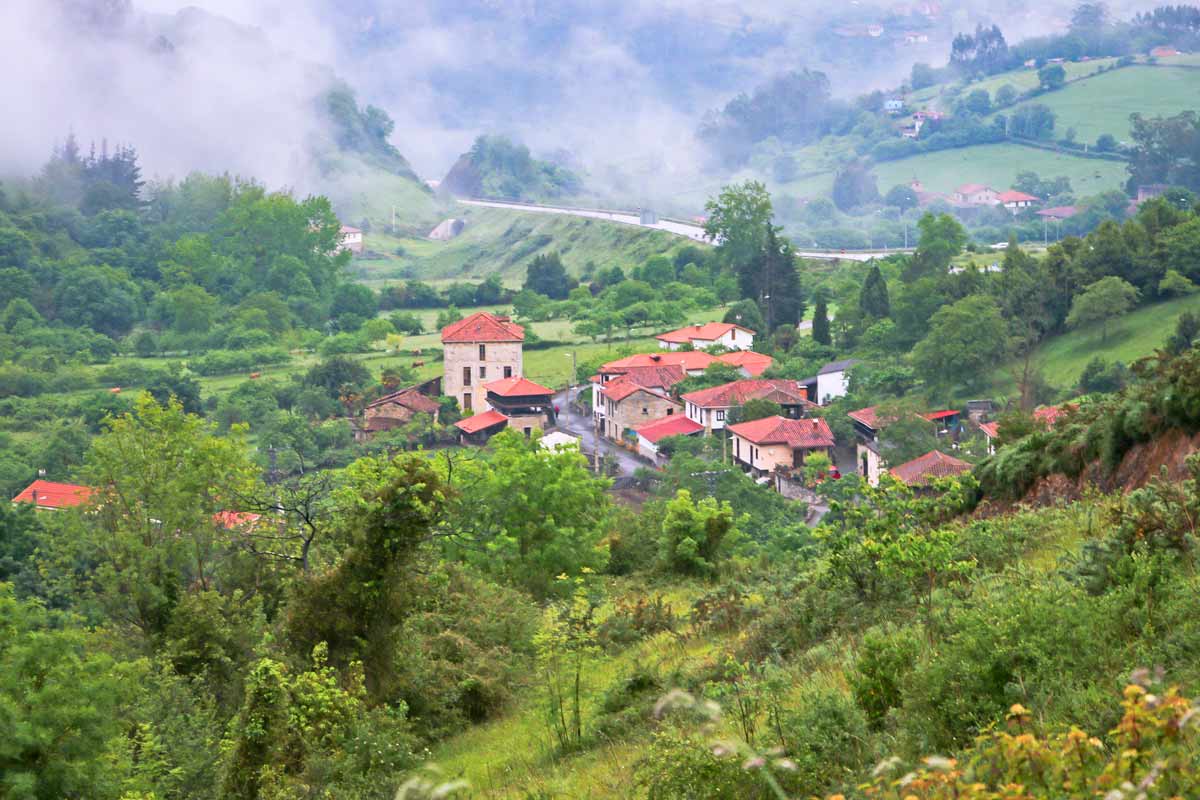
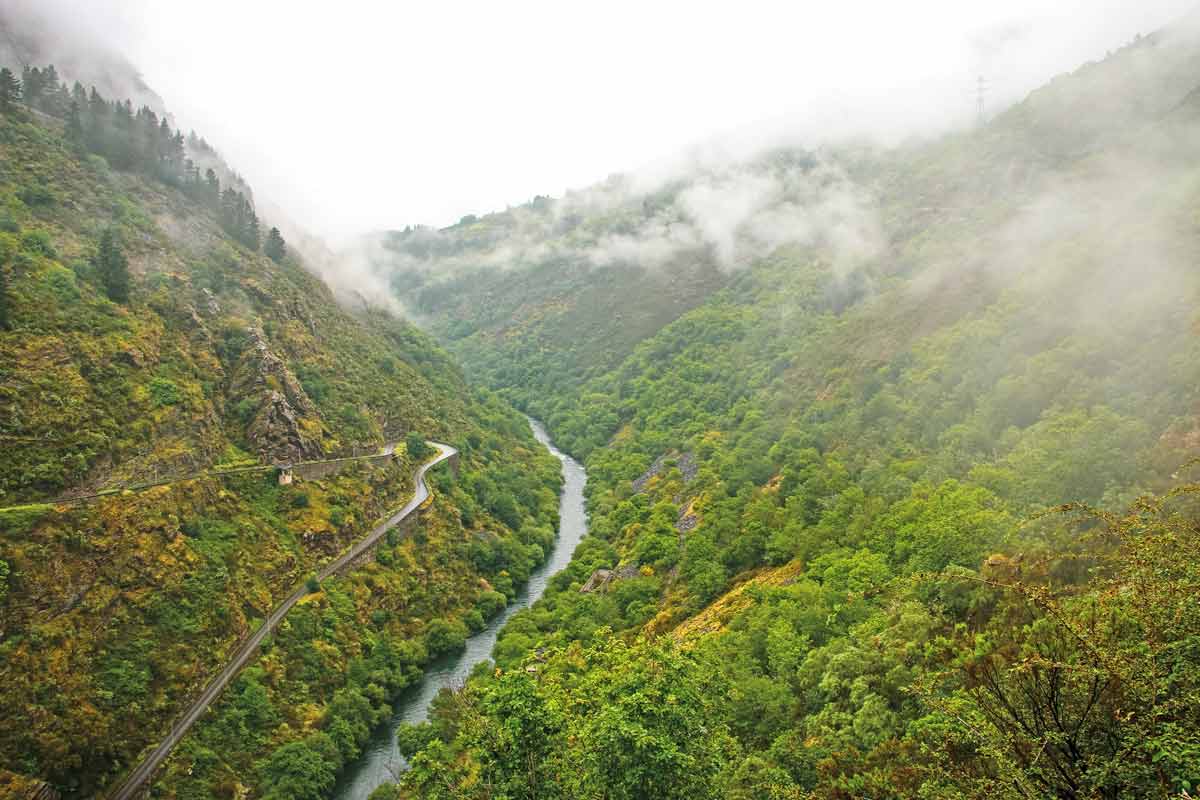
The Camino Primitivo is one of the Camino de Santiago routes in Spain. This picturesque route offers a great combination of the spectacular mountain and forest scenery and interesting historical towns. The Camino is perfect for those who enjoy hiking and prefer quiet trails. In 2025 only 5% (27 868 people) of all pilgrims who arrived in Santiago walked the Camino Primitivo.
We have a detailed post with walking stages of the Camino Primitivo where you can find a day-by-day itinerary breakdown.
Stingy Nomads participates in the Amazon Services LLC Associates Program and other affiliate programs. If you click on the link and purchase the item or make a booking, we will receive an affiliate commission at no extra cost. Thank You for supporting us and assisting us to produce quality, free content.
Camino Primitivo PDFs
Our free downloadable PDFs are here to make your Camino planning easier.
What is the Camino Primitivo?
The name "Primitivo" refers to its origin. According to the legend the route from Oviedo was the first Camino de Santiago ever walked. The history of it dates back to the 9th century when Spanish King Alfonso II walked from Oviedo to Santiago de Compostela. He completed the Camino to commemorate the discovery of the remains of the apostle St. James in Compostela several years earlier.
At that time most of the Spanish territory was under Moorish control, and only the Northern part of Spain remained independent.
How long is the Camino Primitivo?
The total distance of the route from Oviedo to Santiago de Compostela is 321 km/200 mi. It takes on average 12 to 16 days to complete. It can be done over a shorter or longer period depending on how far you walk every day.
If you are limited in time you can walk 100 km on the Camino Primitivo - a required minimum for getting the Compostela certificate. You can walk the last 100 km on the route from Lugo to Santiago or any uninterrupted 80 km + the last stage from O Pedrouzo to Santiago.
How difficult is the walk?
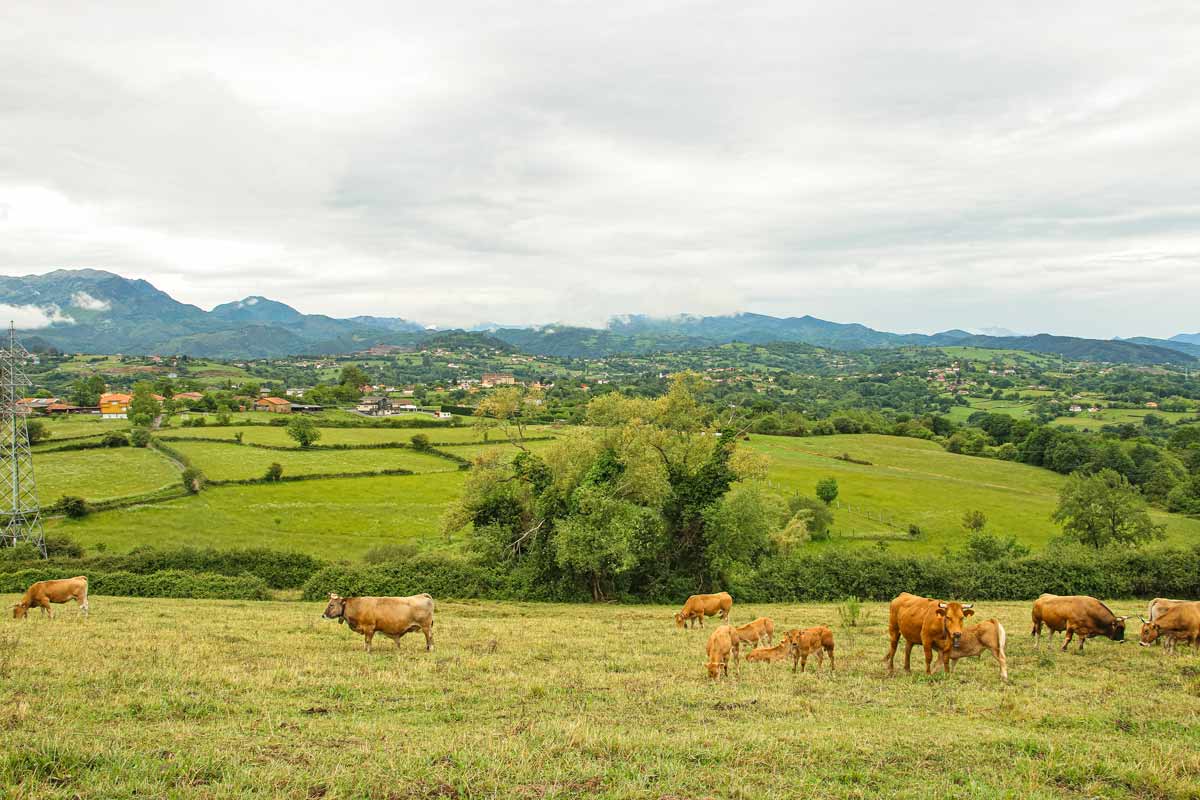
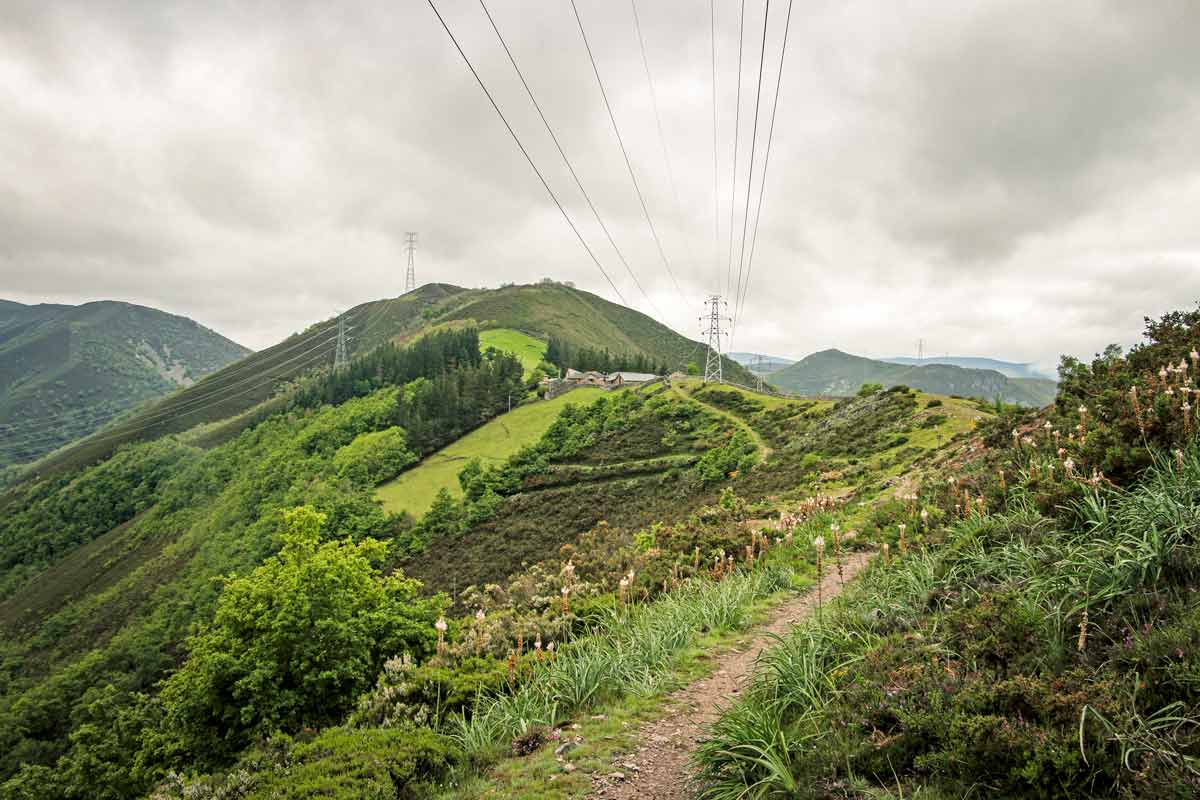
The Camino Primitivo is considered one of the toughest Camino routes due to the mountainous terrain it goes through. The first part of the route from Oviedo to Lugo has many hills and mountains which means every day you have a significant elevation gain. If you don’t enjoy steep ups and downs this route is not the best one for you.
This Camino feels a lot more like a hike in the mountains than any other Camino de Santiago route in Spain.
Where does it start?
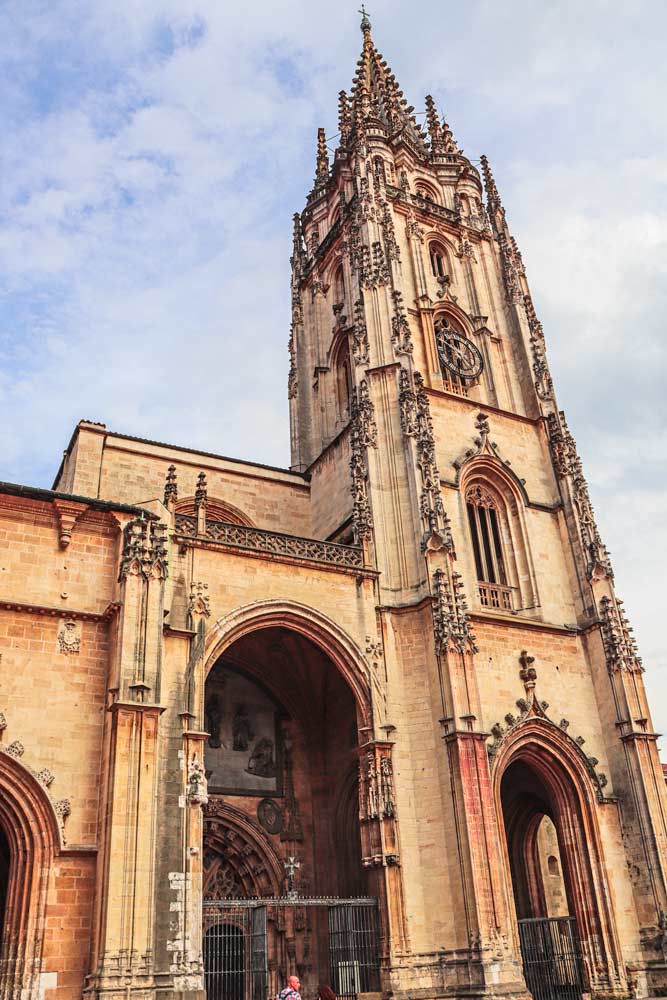
The Camino Primitivo starts at San Salvador Cathedral in Oviedo, a beautiful town in the mountainous region of Asturias, Northern Spain.
How to get to Oviedo?
Step 1. Fly to Madrid. If you come from overseas the easiest way of getting to Oviedo via Madrid. Many airlines offer direct flights to Barajas Airport in Madrid from all over the world.
Step 2. Take a bus/train to Oviedo. From Madrid, you can take a direct bus or train to Oviedo.
There are several daily buses from Madrid including direct buses Barajas Airport to Oviedo. The prices vary between 20 and 40 Euros (sometimes you can find special deals on the website for 10-15 Euros). The travel time is 5 to 6 hours. You can find the up-to-date itinerary and prices on the ALSA website. There are direct buses to Oviedo from other Spanish cities.
You can get from Madrid to Oviedo by direct train. It takes between 3 hours and 4h30min. The price is between 25 and 40 Euros. Buy your tickets and check the timetable on the RENFE website.
The bus and the train station in Oviedo are in the same place, a 20-minutes walk from the Cathedral.
Where to get a Credential (pilgrim’s passport)?
There are a couple of places in Oviedo where you can buy a Credential;
- at the Tourism Information Office, Plaza de Institution, 4;
- at the Municipal albergue El Salvador, Leopoldo Alas Street, 20;
- at the Cathedral of Oviedo, Plaza Alfonso II El Castro.
The price is 3 euros. You can get a stamp at the Cathedral of Oviedo.
The best time for walking
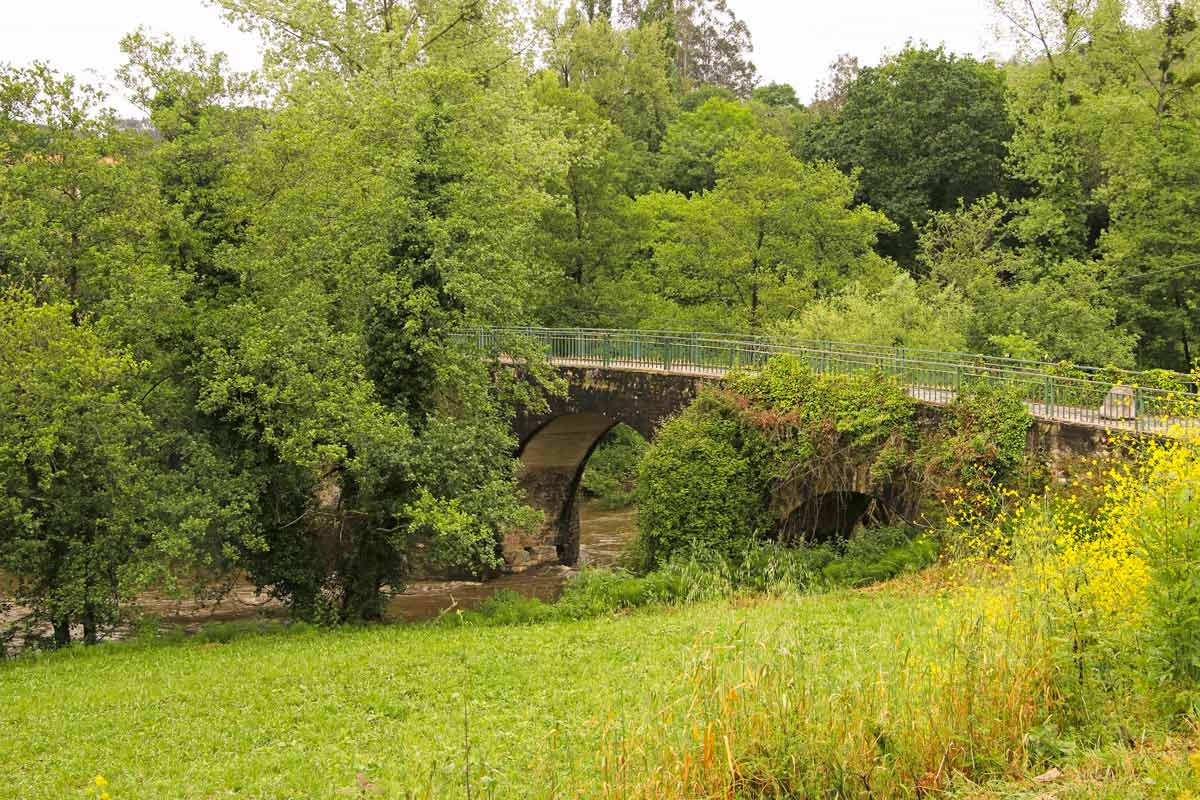
Summer is the best time to do the Camino. It's warm with fewer rainfalls though in the mountains the weather is unpredictable and changes quickly. July and August are the busiest months for this Camino with the best weather conditions. We walked this route at the end of May - beginning of June and got quite a bit of rain. Locals told us it wasn't normal for that time of the year.
Shoulder season May – June and September - beginning of October is a good time for walking. The weather is good and there aren't many people. We wouldn't recommend walking the Camino Primitivo off-season between November and March. Many albergues are closed during this period, it's cold and you are likely to get snow in the mountains.
What is the accommodation like on the Camino Primitivo?
Like on any other Camino route here you can find public (municipal) and private albergues*, hotels, and guest houses.
*Albergues are special hostels for pilgrims on the Camino.
Public (municipal albergues)
Public albergues are the cheapest accommodation option on the Camino.
Those albergues can’t be booked in advance. It is a first come first serve system.
Most public albergues on the Camino Primitivo cost around 10 Euro pp.
Municipal albergues usually don't have lockers. I advise having a small bag to carry your valuable stuff with.
In the high season, public albergues allow you to stay only one night, they can make an exception if you are sick or have any other serious issues.
Municipal albergues usually don't accept backpack delivery. If you use the service you'll have to stay in private albergues and/or hotels.
Private albergues
Private albergues usually have better facilities, are more comfortable and modern, and the price is around 17-20 Euros.
They can be booked in advance through online booking services or over the phone.
Most albergues have washing and drying machines.
You can find more information on accommodation on the Camino in our post Albergues on the Camino de Santiago.
Hotels/guest houses
It’s the most expensive and most comfortable accommodation option on the Camino Primitivo. If your budget allows I recommend staying in private rooms at least 2-3 times a week to get a better rest. Private rooms can be found pretty much everywhere on the route.
The prices vary between 35-40 Euros for a single room and between 50-60 Euros for a double room.
Hotels usually accept luggage delivery. Some places offer breakfast.
Luggage transfer
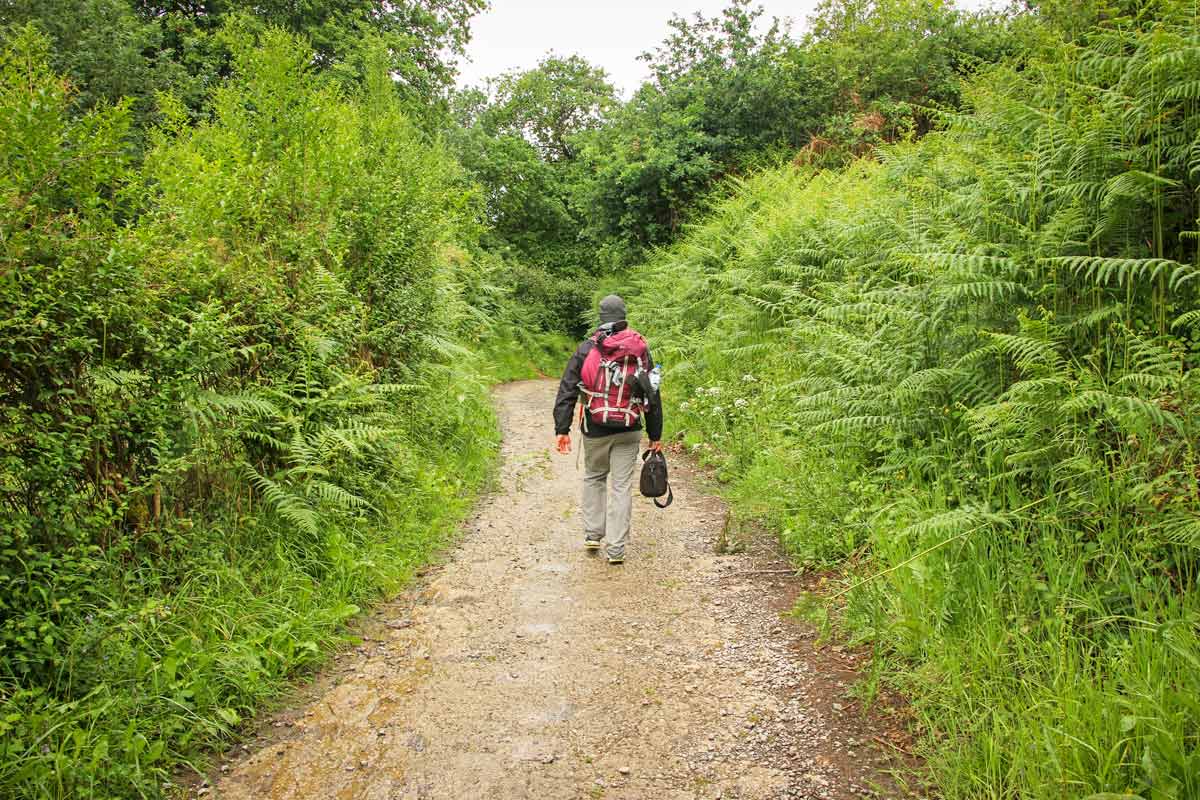
You can use a backpack delivery service on the Camino Primitivo. They pick up your backpack at your albergue/hotel in the morning and drop it off at your next accommodation place by lunchtime. When you arrive your backpack is already there.
The average price is 7-8 Euros per backpack per stage.
Several companies offer a luggage delivery service on the Camino Primitivo. Correos (up to 15 kg per luggage item) and Pilbeo (up to 20 kg per luggage item) are the most popular ones. The entire route (Oviedo to Santiago) works out at 100 Euros per backpack.
The cost of walking the Camino Primitivo
If you stay in public albergues and buy food in supermarkets you can budget 25 Euros per person per day. Staying in private albergues, having lunch in a restaurant, stopping for coffee every day, you will spend around 35-40 Euros pp. per day. If you stay in private rooms and eat out at least once a day, budget 55+ Euros per person per day.
- Accommodation – municipal albergues - 9 Euro per bed, private albergues/hostels 17-20 Euro.
- A meal in a restaurant (Menu del Dia) – 10-12 Euro pp.
- Food shopping – 6-8 Euro per person per day.
- A cup of coffee – 2-3 Euros.
- A beer in a bar – 2-3 Euros.
- Backpack delivery service – 7-8 Euros per backpack per stage.
- Laundry - washing - 3 Euro per load; drying - 3-4 Euro per load.
We have a comprehensive post on the cost of walking the Camino de Santiago where you can find everything you need for planning your Camino budget.
The highlights of the Camino Primitivo
- Oviedo, the starting point of the route.
- Spectacular mountainous scenery in the part between Oviedo and Lugo.
- Embalse de Salime, a large reservoir with turquoise color water surrounded by the mountains and forest.
- Lugo, an old town with the impressive Roman walls.
What to pack for the walk?
The main thing to remember is don't pack too much unless you're planning to use a luggage delivery service. You have to carry your backpack every day for 2 weeks. Our backpacks were 6-7 kg each but we had a laptop and a mirror camera. You can lower the weight of your backpack down to 5 kg.
Two important items to pack are comfortable shoes for the Camino and a good Camino backpack.
You can find more tips on what to pack for the walk in our detailed Camino packing post.
Our final thoughts about the route
The Camino Primitivo was our second Camino de Santiago. We walked it after finishing the Camino Portuguese, and I must say these are two completely different experiences. We both love hiking in the mountains and the Camino Primitivo is as close as you can get to hiking on any Camino de Santiago. No cities and busy roads, only countryside, mountains, and forest.
Despite being unspoiled the Camino has enough infrastructure to make your walk comfortable; different accommodation and food options, easy to find a place to stop for coffee and lunch in the middle of the day, the route is well marked, etc.
This Camino is a great combination of a "wild" hiking experience and good infrastructure.
Another reason we really liked the Primitivo is that there are not many people, compared to the other Caminos routes. Only about 5% of all pilgrims walk this Camino.
The distance is not as long as the French or Northern Camino; you can complete it on your standard holiday.
Questions or Comments?
Got any questions or comments? We would love to help! All questions and comments will be answered by us personally in Buy Me a Coffee. Click below and ask away.
Feel free to support our site by buying us a coffee!

The pretty half of Stingy Nomads, responsible for all our land adventures (hiking, climbing, walking the Camino) and following them write-ups. Alya loves walking since she was a child, she prefers to walk 1000 km with a backpack rather than to do a 10 000 km road trip (actually any road trip). Alya is a big fan of Latin America, the Spanish language, and dancing. Every time we go away she desperately misses our dog Chile.