
On the Camino de Santiago, your feet become your most important piece of equipment. Day after day of walking — often 20 to 35 kilometers — puts enormous stress on your skin, toes, heels, and arches. Blisters are one of the most common reasons pilgrims suffer, slow down, or even stop walking altogether. That is why many pilgrims become obsessed with socks.


Stingy Nomads participates in the Amazon Services LLC Associates Program and other affiliate programs. If you click on the link and purchase the item or make a booking, we will receive an affiliate commission at no extra cost. Thank You for supporting us and assisting us to produce quality, free content.
Our first big sock discovery was merino wool, what a difference this amazing material made. See our article on testing the best merino wool socks for walking the Camino. Merino wool hiking socks felt like the end of smelly feet and blisters. The most recent piece of equipment that got me really exited for blister free hiking on the Camino is toe socks.
Toe socks — especially those made by Injinji — have become increasingly popular among long-distance hikers and Camino pilgrims.
Unlike traditional socks, Injinji socks separate each toe individually, so they are like gloves for your feet. This did not sound very comfortable, but after walking for a while I was not even aware of the material between my toes. The biggest benefit is blister prevention. Traditional socks allow toes to rub against each other for hours, especially when feet swell in hot weather or after long descents. That constant friction creates hotspots and eventually painful blisters between the toes. Injinji’s five-toe design eliminates most of that skin-on-skin friction.
The reason toe socks are popular is simple: they work. I thought it would be uncomfortable, I was wrong, I love them.
Choosing the Best Toe Socks for your Pilgrimage
A variety of toe socks are available, so you should consider the same sock features you would when choosing regular hiking socks for walking the Camino de Santiago.
- Sock Brand
- Fiber content (what is the sock made of)
- Thickness (weight)
- Length
- Shoe size
Best Toe Sock Brand
There are several brands making toe socks, Injinji, Creepers, Xoskin, Wright, and Armaskin are often mentioned by long distance hikers. Injinji is definitely the most well-known brand out there and is common on the Camino.


Fiber content (what is the sock made of)
Fiber content is a very important consideration when buying socks. Hiking socks need to made from a blend of fibers that wick away moisture and keep your feet dry. Merino wool is the best soft, moisture-wicking, breathable, material and is also great for regulating temperature. It is also naturally odor resistant, which is extremely valuable during multi-week pilgrimages where laundry opportunities can be limited.
COOLMAX is a polyester fiber often used in producing toe socks that offers good moisture regulation. My personal preference is merino wool, in testing many different kinds and brands of socks nothing has ever come even close to merino wool in my experience.
One of the biggest advantages of merino wool compared to cotton is moisture management. Cotton absorbs sweat and stays wet. Once wet, cotton creates friction and softens the skin, making blisters far more likely. Cotton also dries slowly, especially during rainy Camino days. This is why experienced hikers almost universally avoid cotton socks.
Synthetic materials such as Coolmax or polyester blends dry faster than wool and can feel cooler in hot weather. Many trail runners on the Camino prefer synthetic Injinji models because they remain lightweight and breathable during summer walking. However, synthetic socks tend to hold more odor over time and sometimes feel less comfortable during very long stages.
Merino wool sits in the middle ground beautifully. It may dry slightly slower than pure synthetics, but it offers superior comfort, better temperature regulation, and significantly less odor buildup. For most Camino pilgrims, especially on walks lasting several weeks, merino wool becomes the preferred choice.
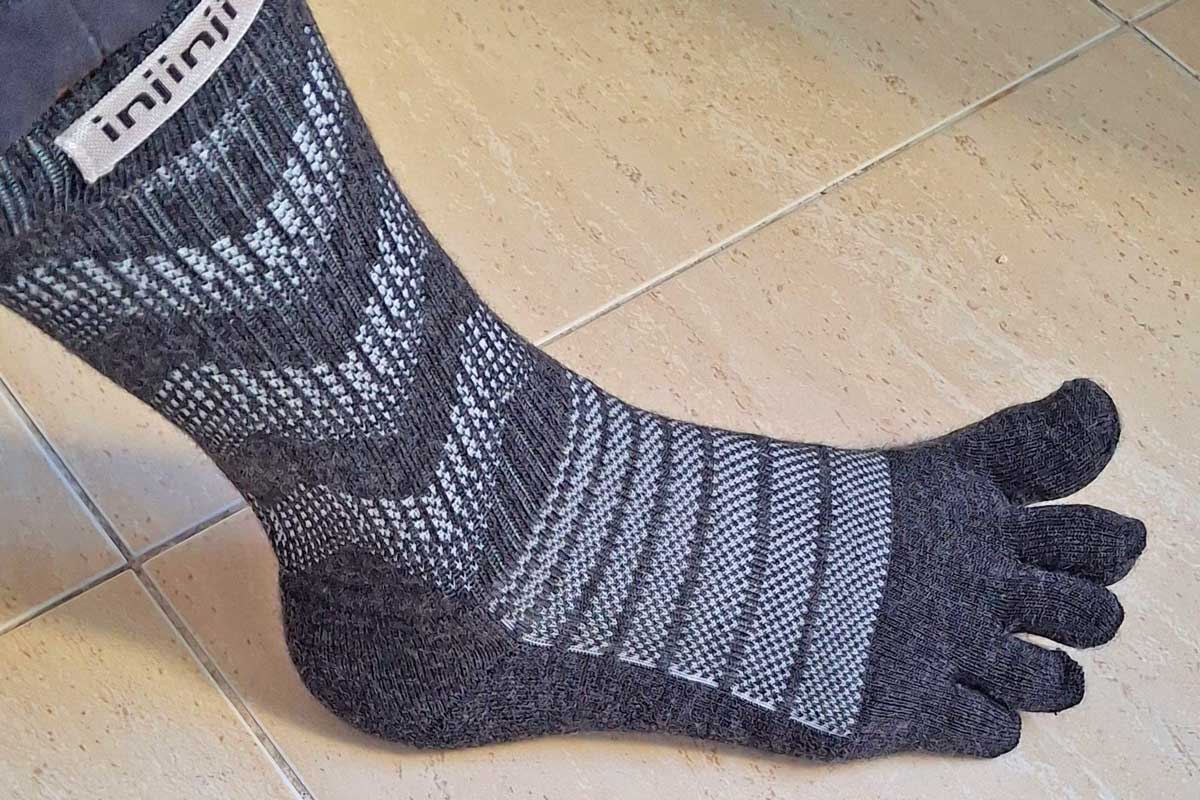
Toe Sock Set-up
I have been wearing two different toe sock set ups for long distance hikes. The two ways most pilgrims on the Camino wear Injini toe socks are either by layering or by only wearing a single layer medium-weight toe sock.
- Single Layer – many hikers use only a single layer toe sock, various materials, weight and length hiking toe socks are available.
- Layering two socks – Many experienced pilgrims use a two-layer sock system. This usually combines a thin Injinji liner sock underneath a thicker outer hiking sock.
Hiking with a single layer toe socks
Medium weight, crew length merino wool toe socks are excellent for hiking and are manufactured by various brands. The Injini Trail, worked very well under different conditions keeping my feet dry even in hot conditions.
The Injinji Outdoor hiking toe socks are made from Merino wool with Injinji’s anatomical five-toe design, they are excellent for blister prevention and I found them very comfortable. Midweight padding under your foot absorbs shock, arch support is built-in, and mesh at the top keeps your feet cool.
The Injinji Trail Midweight Crew Socks are also very popular hiking socks made with Injinji’s five-toe patented designed specifically for runners and hikers to prevents blisters & hotspots. This is a synthetic sock made from 39% CoolMax 58% Nylon 3% Lycra.
Sock Length
- Crew Hiking Socks – The Crew sock height is the most common hiking sock stretching to about mid-calf. In the Crew style, Injinji toe socks produce the Liner series, Hiker series, and the Outdoor Midweight Crew sock.
- Mini-Crew Hiking Socks is a nice shorter sock –The cuff of Mini-Crew socks hits right above the ankle and fits securely to keep out dust and gravel.The Injinji Trail Midweight Mini-Crew is a popular model.
- Creepers Merino Wool Boot Socks is a Midweight Cushioned Toe Socks for Hiking & Outdoor Use designed in New Zealand.
Layering – Two-Sock System For Hiking
The two-sock layering system provides advanced blister protection, moisture management and comfort for hiking. A thin Injinji liner sock is worn underneath a thicker outer hiking sock. Layering works great for me. The theory behind the system is that friction happens between the sock layers instead of directly against your skin. This dramatically reduces the likelihood of blisters on long walking days.
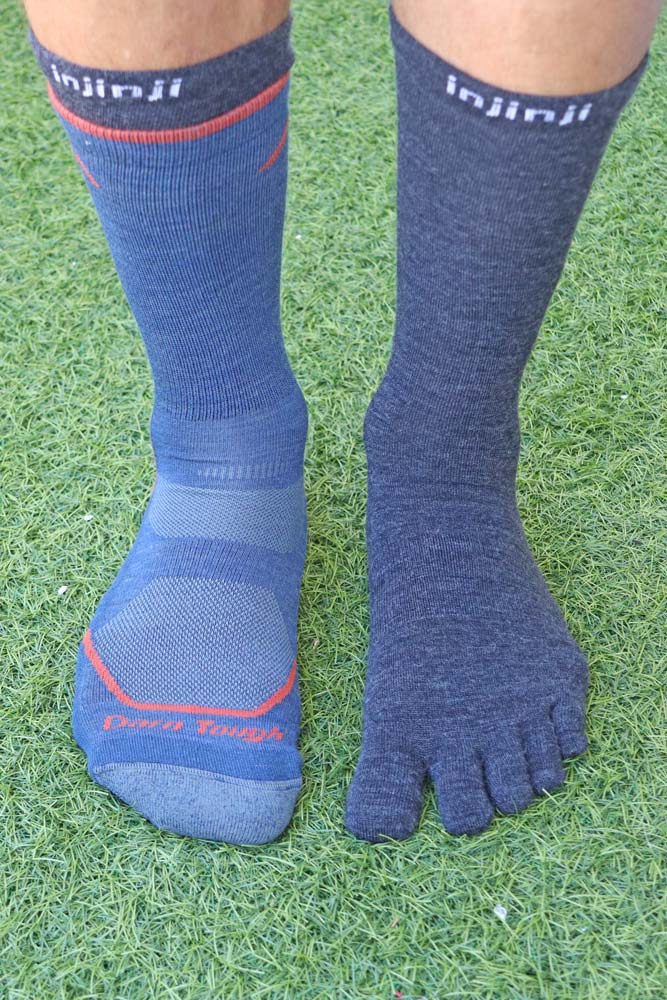
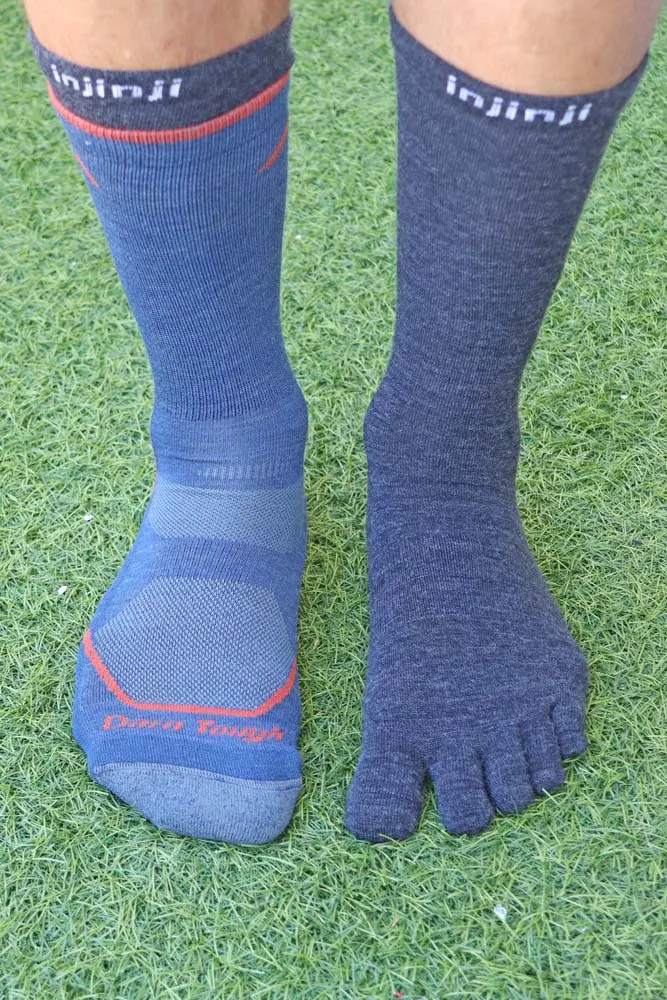
Injinji Men’s Liner + Hiker Crew Socks is a two-sock layering system sold by Injinji.
A very popular setup for the Camino is a lightweight Injinji liner combined with a merino wool outer sock. I prefer to wear a merino wool Injinji liner with my favorite Darn Tough merino wool hiking socks for even greater moisture control and comfort.
I have happily combined my merino liners with Darn Tough – Hiker Micro Crew Midweight socks, and Danish Endurance Premium Outdoor Hiking Socks. In summer when it is hot, I use the Darn Tough Vermont Light Hiker Micro Crew Light Cushion an excellent thinner sock with sufficient padding.
If you wear the liners under a pair of socks check that you have shoes with a large toe box to ensure your feet are comfortable. I love my Merrel Moab 3 Wide Hiking Shoes. The large toe box offers more than enough space to comfortably wear liners and socks.
Are the Five Toe Socks Comfortable
Comfort is another area where toe socks surprise many first-time users. Initially, some walkers find the separate toe sleeves slightly strange. But after a few days, many report feeling more stable and natural while walking. The toes can spread more freely inside trail runners or hiking shoes, reducing pressure and improving balance. It took me only a couple of minutes to adjust.
Toe socks are especially effective for pilgrims who are prone to blisters between the toes.
That said, no sock system is perfect for everyone. Some walkers find double-layer sock systems too warm in peak summer heat. Others discover that excessive moisture buildup can still cause problems if socks are not changed regularly during the day. Even the best socks cannot compensate for shoes that fit poorly or for walking distances beyond what your feet are conditioned for.
The key is testing your system before arriving on the Camino. Never start a long pilgrimage with brand-new socks and shoes that you have never worn together. Train with the exact combination you plan to use. Walk long distances. Test them in heat, rain, and on back-to-back walking days. Small issues become huge problems after 200 kilometers.
Preventing Blisters when Walking the Camino de Santiago
For most Camino pilgrims, a simple strategy works best:
- 2–3 pairs of socks
- Merino wool whenever possible
- Change into dry socks during long hot days
- Wash socks every evening
- Stop immediately when a hotspot develops
Ultimately, the reason so many experienced pilgrims recommend Injinji socks is because comfort on the Camino is cumulative. Small reductions in friction and moisture matter enormously over weeks of walking. Healthy feet allow you to focus on the experience itself — the villages, conversations, landscapes, and quiet moments — instead of pain with every step.
For many pilgrims, switching to toe socks is one of the smartest gear decisions they make before starting the Camino de Santiago.


Travel bloggers and Camino de Santiago Experts